
Why Is My Smart Refrigerator Water Dispenser Slow?
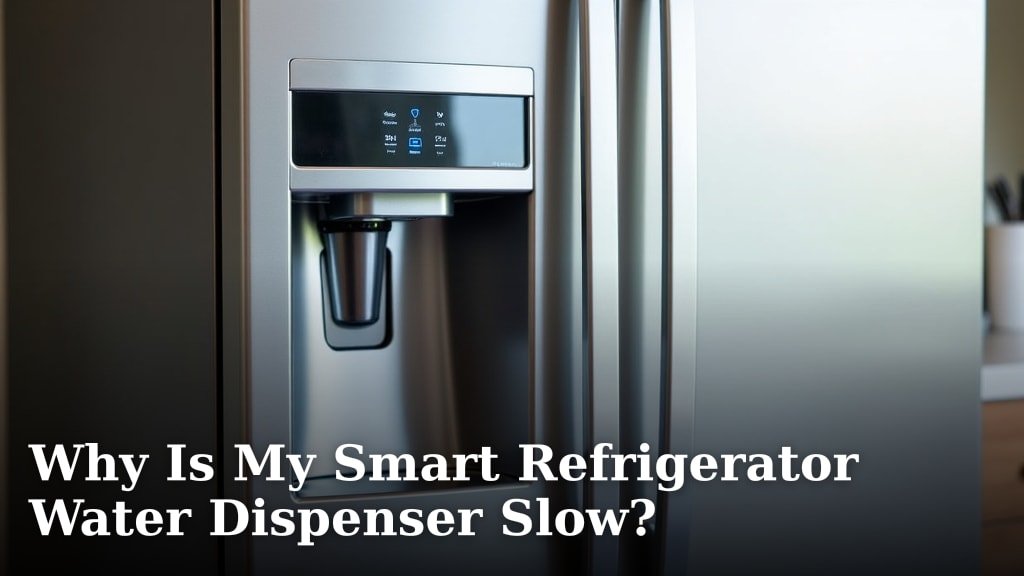
Your smart refrigerator water dispenser is slow because of low water pressure, a clogged water filter, or issues with the water supply line itself. These are the most common reasons we found when researching why your water flow might be weak.
You might be surprised how often a simple filter change can fix the problem. Or, maybe your home’s water pressure needs a check. Don’t worry, we’ll walk you through these easy fixes.
- Check your home’s water pressure.
- Replace your water filter.
- Inspect the water supply line.
- Clean the dispenser nozzle.
Let’s look at each of these potential culprits and how you can get your water flowing freely again.
Troubleshooting Your Smart Refrigerator’s Slow Water Dispenser
You’ve come to the right place if your smart refrigerator water dispenser is giving you more of a trickle than a stream. We’ve found that this is a common issue with several straightforward solutions. Let’s dig in and get that water flowing!
Understanding Water Pressure’s Role
Water pressure is key to a good flow. Think of it like a garden hose; if your spigot isn’t fully open, the water just dribbles out. Your refrigerator’s dispenser works the same way. Low pressure means slow water.
Many factors can influence your home’s water pressure. It might be a simple setting, or something a bit more involved. We’ll help you check the most likely culprits.
Checking Your Home’s Main Water Supply
First, let’s look at your home’s main water supply. Is the valve fully open? This valve is usually near your water meter or where the main line enters your house. A partially closed valve will definitely reduce pressure throughout your home.
We’ve seen that sometimes these valves can get bumped. Or they might have been closed for maintenance and not fully reopened. Give it a quick check. Make sure it’s turned all the way to the “open” position.
Assessing Your Refrigerator’s Water Line
Your refrigerator has its own dedicated water line. This line often connects to a cold water pipe under your sink or in your basement. There should be a small shut-off valve on this line. Is it fully open?
A common oversight is a partially closed valve here. It’s often tucked away behind appliances or in a cabinet. Make sure it’s turned completely on. This is a very common cause of reduced flow.
The Clogged Water Filter Conundrum
This is perhaps the most frequent reason for a slow dispenser. Your water filter does an important job. It catches impurities, giving you clean, great-tasting water. But over time, those caught impurities build up.
When a filter gets too clogged, water struggles to pass through. It’s like trying to breathe through a very stuffy nose. Your water dispenser just can’t push enough water through. Many refrigerator manufacturers recommend changing your filter every six months (GE Appliances).
When to Replace Your Water Filter
Most smart refrigerators have an indicator light that tells you when to change the filter. But sometimes, even before the light comes on, the filter can start to clog. If you’ve noticed a gradual decrease in water flow, the filter is a prime suspect.
Think about how much water you use. A large family that drinks a lot of water will need to change their filter more often. Even if the light isn’t on, a slow dispenser is a good sign it’s time for a change.
How to Replace Your Refrigerator Water Filter
Replacing the filter is usually a simple DIY task. You won’t need a plumber for this! Most filters twist out easily. Your refrigerator’s manual will have specific instructions for your model. It’s worth keeping that manual handy.
Always use the correct replacement filter for your specific refrigerator model. An incorrect filter might not fit properly or could even cause more problems. Take a quick photo of your current filter before you buy a new one to be sure.
- Locate your filter (often inside the fridge, in the base grille, or top right corner).
- Turn off the water supply to the refrigerator (optional, but recommended to prevent spills).
- Twist or pull out the old filter.
- Insert the new filter, twisting until it locks into place.
- Flush about 2-3 gallons of water through the dispenser to clear any air or carbon particles.
Inspecting the Water Supply Line for Obstructions
Beyond the filter, the actual water line can cause issues. This is the thin tube that connects your home’s water supply to your refrigerator. It needs to be clear and kink-free to work correctly.
Sometimes, this line can get bent or crimped. This is especially true if you’ve moved the refrigerator recently. Even a slight kink can severely restrict water flow. It’s like stepping on a garden hose.
Checking for Kinks and Bends
Gently pull your refrigerator out from the wall. Be careful not to damage your flooring. Look at the water line running behind it. Is it pinched or sharply bent anywhere?
Straighten out any kinks you find. You might need to adjust the refrigerator’s position slightly to give the line enough room. We’ve seen that even a small change in angle can fix this. Make sure the refrigerator isn’t pushing against the line.
Looking for Ice Blockages
In some cases, especially with very cold freezers, the water line can actually freeze. This creates an ice blockage that stops water flow entirely, or severely slows it down. This often happens in the line that goes into the freezer door.
If you suspect an ice blockage, you’ll need to thaw it. You can try unplugging the refrigerator for a few hours. Keep the freezer door open. A hairdryer on a low, warm setting can also help, but be very careful not to overheat or melt any plastic parts. Direct the air at the suspected area.
Addressing a Dirty Dispenser Nozzle
While less common, a clogged dispenser nozzle can also reduce water flow. This is the tiny spout where the water comes out. Mineral deposits from hard water can build up here over time.
These deposits act like tiny dams, making it harder for water to escape. You might see white or green crusty build-up around the opening. It’s a sign your water is “hard” (Environmental Protection Agency).
Cleaning the Dispenser Nozzle
Cleaning the nozzle is usually very easy. You can use a small brush, like an old toothbrush, or even a toothpick. A cotton swab dipped in vinegar can help dissolve stubborn mineral deposits. Vinegar is a natural descaler.
Gently scrub the nozzle opening. Make sure not to push any debris further into the dispenser mechanism. You want to clear the opening, not create a new blockage. This simple cleaning can often improve flow if deposits are the issue.
When to Call a Professional (or Check Your Warranty)
You’ve tried all the common fixes. You’ve checked the pressure, changed the filter, inspected the lines, and cleaned the nozzle. If your dispenser is still slow, it might be time for professional help. Or, maybe your smart refrigerator is still under warranty?
Before calling for service, double-check your warranty. Many smart appliances come with a good warranty period. If it’s still covered, the repair might be free. A professional can diagnose more complex issues, like a faulty water inlet valve or pressure regulator.
Your Troubleshooting Checklist
Here’s a quick recap of what we’ve covered. Go through this list step-by-step. You’ll likely find your solution here!
- Verify your home’s main water supply valve is fully open.
- Confirm the refrigerator’s specific water supply valve is completely open.
- Replace your water filter, even if the indicator light isn’t on.
- Inspect the water line behind the refrigerator for kinks or bends.
- Check the water line for any ice blockages.
- Clean the dispenser nozzle for mineral build-up.
We hope this guide helps you get your smart refrigerator water dispenser back to full speed. There’s nothing worse than waiting endlessly for a glass of water!
Conclusion
Dealing with a slow water dispenser can be frustrating, but as we’ve shown, the solution is often simpler than you think. By systematically checking for low water pressure, replacing a clogged filter, or looking for kinks in the water line, you can often restore full flow yourself. These steps not only save you money but also help you understand your appliance better.
You now have a clear checklist to diagnose and fix the most common causes. Don’t let a trickle ruin your refreshment. Take action on these tips today to enjoy a strong, steady stream from your smart refrigerator once again.
Frequently Asked Questions
How often should I change my smart refrigerator’s water filter?
Most manufacturers, including GE Appliances, recommend changing your water filter every six months. However, if you notice a decrease in water flow or a change in taste sooner, it’s wise to replace it.
Can low home water pressure affect just my refrigerator?
While low home water pressure usually impacts multiple fixtures, a partially closed refrigerator-specific water valve can restrict pressure only to your appliance. Always check both your main supply and the refrigerator’s shut-off valve.
What if my water line is frozen?
If you suspect an ice blockage, you can try thawing it by unplugging the refrigerator for several hours or using a hairdryer on a low, warm setting directed at the affected area. Be cautious not to damage plastic components.
Is it normal for a new water filter to dispense slowly at first?
Yes, it’s normal for a new filter to dispense slowly initially and sometimes sputter. You need to flush about 2-3 gallons of water through the dispenser to remove air and carbon particles, which improves flow.
My water dispenser is still slow after trying everything. What should I do next?
If you’ve gone through all the troubleshooting steps and your dispenser is still slow, it might be time to contact a professional appliance technician. There could be a more complex issue, like a faulty water inlet valve, that requires expert diagnosis.