
Do Smart Refrigerators Work During a Power Outage?
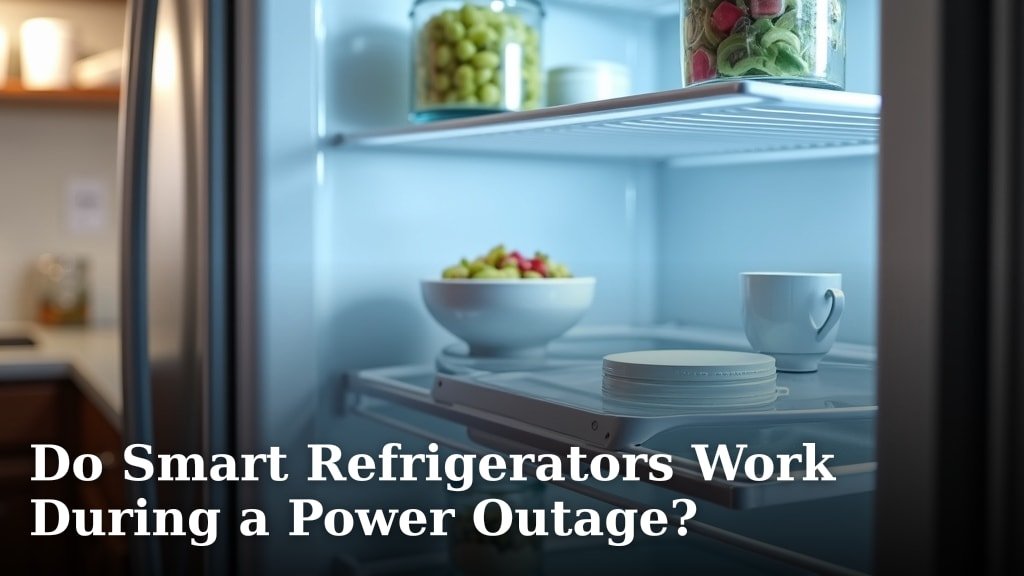
No, a smart refrigerator will not work during a power outage in the way you might expect. Like any other refrigerator, it needs electricity to keep your food cold. The smart features also rely on a constant power supply and your home network.
When the power goes out, your smart fridge becomes a very expensive cooler. Its ability to preserve food depends entirely on how well it’s insulated. The advanced features that make it “smart” simply won’t function without electricity. You’ll lose access to your apps, internal cameras, and Wi-Fi connectivity.
- Smart fridges need electricity to cool.
- Smart features won’t work without power.
- Food stays cold due to insulation only.
- Keep the door closed to save cold air.
Worried about your groceries during a blackout? Let’s walk through exactly what happens to your smart refrigerator and what you can do to protect your food.
What Happens When Your Smart Fridge Loses Power?
When the electricity goes out, your smart refrigerator essentially becomes a regular, non-smart cooler. It stops actively chilling your food. The internal temperature will slowly begin to rise. Its ability to keep food safe then depends on its insulation quality and how often you open the door.
All the fancy features you love? They stop working. The touchscreen goes dark. The internal cameras can’t stream. Your app won’t connect. It’s just a big, insulated box until the power returns.
The Loss of Smart Features
Your smart fridge’s advanced capabilities rely entirely on electricity and often your home Wi-Fi network. Without power, these features become instantly unavailable. It’s like your smartphone running out of battery – it’s just a sleek, non-functional slab.
Touchscreen and Apps Go Dark
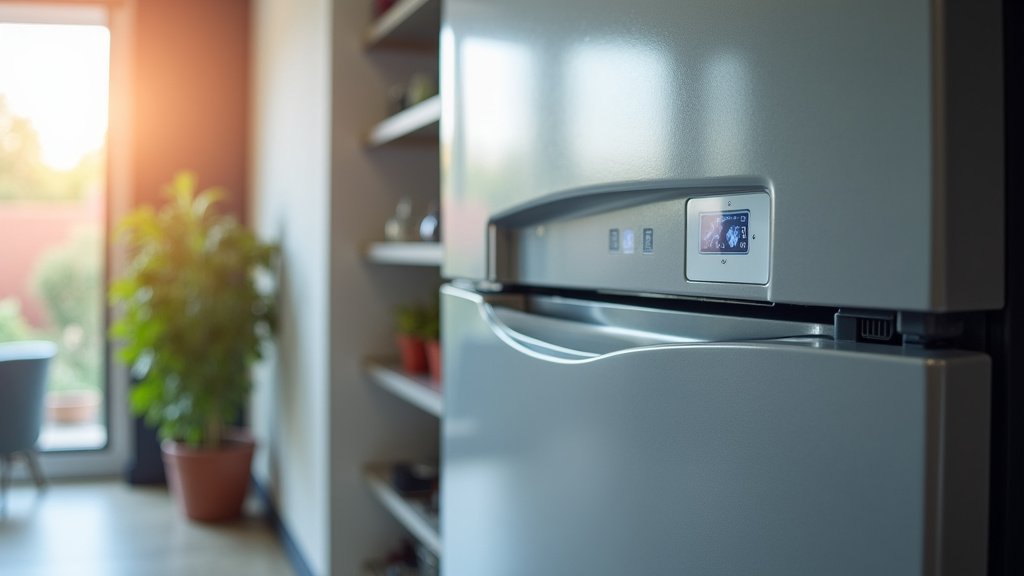
The interactive screen on your smart fridge is one of its signature features. It displays recipes, calendars, and lets you manage groceries. In a blackout, this screen will be completely blank. You won’t be able to access any of its digital functionalities or connected apps.
Internal Cameras and Inventory Management Stop
Many smart fridges boast internal cameras that let you peek inside from your phone. This is handy for checking what you need at the grocery store. However, these cameras need power to operate. During an outage, you’ll lose this ability to remotely check your fridge’s contents.
Wi-Fi Connectivity Disappears
For many smart features, your fridge needs to be connected to your home Wi-Fi. If the power is out, your Wi-Fi router likely won’t be working either. This means your fridge can’t communicate with your phone or the cloud, rendering all its network-dependent functions useless.
How Long Can Your Food Stay Safe in a Blackout?
This is the big question for many homeowners. How long do you have before your food starts to spoil? The good news is that refrigerators and freezers are designed to hold their temperature for a while, even without power.
A closed refrigerator can keep food cold for about 4 hours. A full freezer can maintain its temperature for approximately 48 hours (24 hours if it’s half-full). This is according to guidance from the Centers for Disease Control and Prevention (CDC).
Remember, these are estimates. Factors like the outside temperature, how full your appliance is, and its insulation quality will all play a role in the actual time food remains safe.
Key Factors Affecting Food Safety
Several elements determine how long your food will last during a power outage. Understanding these can help you make informed decisions when the lights go out.
Keeping the Doors Closed
This is perhaps the most critical action you can take. Every time you open the refrigerator or freezer door, you let cold air out and warm air in. Try to keep the doors closed as much as possible. Only open them if absolutely necessary and quickly retrieve what you need.
Insulation Quality
Modern refrigerators generally have good insulation, which helps them hold temperature longer. Older models or those with worn door seals might not perform as well. Good insulation acts like a thermal blanket, slowing down the warming process.
How Full Your Appliance Is
A full refrigerator or freezer has less air space, meaning less air to warm up. Food items, especially frozen ones, act like ice blocks, helping to maintain a lower temperature. We found that a fully stocked freezer will hold its temperature much longer than an empty one.
Ambient Room Temperature
If your kitchen is already very warm, your refrigerator will lose its coldness faster. Conversely, a cooler ambient temperature will help your appliance maintain its internal temperature for a longer period.
Preparing Your Smart Fridge for a Power Outage
While you can’t prevent a power outage, you can take steps to minimize its impact on your food. A little preparation can go a long way in saving your groceries and reducing food waste.
Pre-Outage Checklist for Food Safety
Here’s a quick checklist to help you prepare your smart fridge for potential power disruptions:
- Check Thermometers: Ensure both your fridge and freezer have working thermometers so you can monitor temperatures accurately when power returns.
- Freeze Water Bottles: Keep several plastic bottles of water frozen in your freezer. They act as ice packs and can help keep the freezer colder longer.
- Stock Up on Ice: Have bags of ice ready. You can use these to supplement cooling in your fridge or even in a cooler for perishable items.
- Adjust Temperatures: If a storm is predicted, consider lowering your fridge and freezer temperatures a few degrees below normal. This gives them a “cold buffer.”
- Plan Your Meals: Try to eat perishable items first if you know a power outage is likely. Minimize what needs to stay cold.
- Have a Cooler Ready: Keep an insulated cooler handy. If the power is out for an extended period, you can transfer highly perishable items to a cooler with ice.
What to Do During an Outage
Once the power goes out, your actions matter. Staying calm and following a few simple rules can make a big difference in food safety.
Resist Opening Doors
We can’t stress this enough. Every time you open the door, cold air escapes. Try to keep the refrigerator and freezer doors closed as much as possible. Use common sense. If you need something, get it quickly and close the door tightly.
Move Items to a Cooler (If Necessary)
If you anticipate a long outage, or if your fridge has been without power for a few hours, consider moving highly perishable items (like raw meat, dairy, or opened deli meats) to a well-insulated cooler filled with ice. This can buy you more time.
Monitor Food Temperature
Once power is restored, check the temperature inside your refrigerator and freezer. Any perishable food (meat, poultry, seafood, dairy, eggs, or leftovers) that has been above 40°F (4°C) for more than two hours should be discarded (USDA guidelines). When in doubt, throw it out!
Smart Fridge Benefits Beyond Power Outages
While smart features don’t help in a blackout, they offer many conveniences in everyday life. They make meal planning easier and reduce food waste.
Many people find the ability to manage grocery lists through an app, see inside their fridge remotely, or even get recipe suggestions a real time-saver. These features streamline your kitchen routine. They don’t promise uninterrupted cooling during an outage, but they certainly enhance your daily life when power is flowing.
| Feature | During Power Outage | During Normal Operation |
|---|---|---|
| Cooling System | Stops working (insulation only) | Actively cools food |
| Touchscreen/Apps | Not functional | Interactive, displays info, controls |
| Internal Cameras | Not functional | View contents remotely via app |
| Wi-Fi Connectivity | Not functional (router off) | Connects to home network for smart features |
| Ice Maker/Water Dispenser | Not functional | Dispenses ice and filtered water |
| Food Preservation | Relies on insulation, limited time | Continuous, controlled cooling |
Conclusion
While your smart refrigerator offers fantastic convenience in daily life, it’s essential to remember its limitations during a power outage. Its “smart” features won’t work, and its ability to preserve food relies solely on good insulation. Don’t let a blackout catch you unprepared. By understanding how long your food stays safe and taking simple preventative steps, you can significantly reduce waste and stress. Plan ahead, keep those doors closed, and you’ll navigate any power disruption with confidence.
Frequently Asked Questions
Can I use a generator to power my smart refrigerator during an outage?
Yes, you can power your smart refrigerator with a generator. Ensure your generator can handle the refrigerator’s starting and running wattage. Consult your appliance’s manual or a qualified electrician for safe hook-up procedures to avoid damage or electrical hazards.
Will my smart fridge automatically reconnect to Wi-Fi after power is restored?
Most smart refrigerators are designed to automatically reconnect to your home Wi-Fi network once power is restored to both the fridge and your router. However, occasionally, you might need to manually reset your router or the fridge’s Wi-Fi settings if it doesn’t reconnect on its own.
Should I remove all food from my smart fridge during a long power outage?
If a power outage is expected to last longer than 4 hours for your refrigerator or 24-48 hours for your freezer, it’s wise to move highly perishable items to an insulated cooler with ice. For very long outages, consider moving essential items to a neighbor’s working fridge or a community cooling center if available.
Are smart fridges more efficient than regular fridges during normal operation?
Smart refrigerators often include energy-efficient components, similar to modern standard fridges. Some smart features, like remote monitoring or optimized cooling cycles, might contribute to slightly better energy use. However, their primary benefit is convenience, not significantly superior energy efficiency over a non-smart equivalent.
What’s the ideal temperature to set my smart fridge and freezer normally?
For optimal food safety and energy efficiency, you should set your refrigerator to 37°F (3°C) and your freezer to 0°F (-18°C). These temperatures help keep your food fresh and safe from bacterial growth without overworking your appliance.