
How Do You Know If Your Refrigerator Water Filter Needs Replacing?
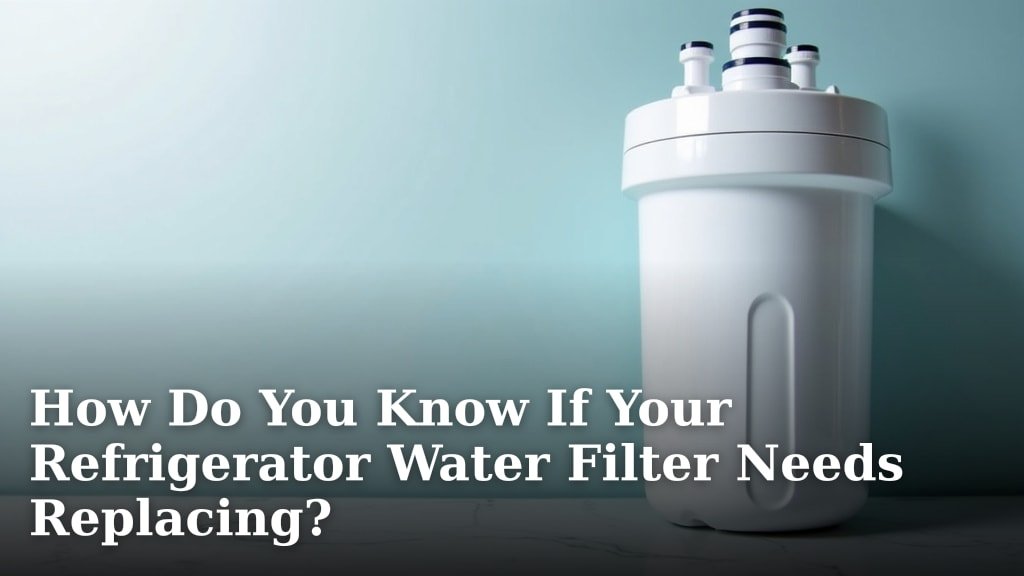
You know your refrigerator water filter needs replacing when you notice a change in water taste or smell, reduced water flow, or the filter indicator light comes on. These signs tell you it’s time for a fresh filter. Ignoring these warnings can affect your water quality.
Most refrigerator manufacturers recommend replacing your water filter every six months. This general guideline helps maintain optimal performance. However, your actual replacement schedule might vary based on your water usage and local water quality.
- Water tastes or smells funny.
- Water comes out slower than usual.
- Your fridge’s indicator light turns on.
- It’s been about six months since the last change.
- You use a lot of filtered water.
Let’s walk through how to spot these warning signs. We’ll help you keep your drinking water clean and fresh.
Recognizing When Your Refrigerator Water Filter Needs Attention
Knowing when your refrigerator water filter is ready for a change is pretty straightforward once you understand the common signals your appliance sends. These signals are your fridge’s way of telling you, “Hey, it’s time for some maintenance!”
The Taste and Smell Test: Your First Line of Defense
This is often the most obvious sign. Your senses are powerful tools for detecting water quality changes. If your water starts tasting “off” or has a strange odor, it’s a strong indicator.
Unpleasant Taste in Your Water
Does your freshly filtered water suddenly taste like metal, dirt, or even just plain stale? This usually means the filter’s activated carbon is no longer effectively removing impurities. Over time, the carbon media inside the filter gets saturated with the contaminants it’s designed to catch. Once saturated, it can’t do its job anymore, and those tastes start to come through. It’s like a sponge that’s full; it can’t absorb any more.
Noticeable Odors
Just like taste, unusual smells are a big red flag. A common complaint is a chlorine smell, especially if your municipal water supply uses chlorine for disinfection. While chlorine is safe in regulated amounts, a good filter removes that smell and taste. If you start smelling it again, your filter is likely exhausted. Other odors, like a musty or earthy smell, could point to sediment or organic compounds making their way past a spent filter (Environmental Protection Agency).
Flow Rate: Is Your Water Slower Than Molasses?
When you press the dispenser, do you feel like you’re waiting an eternity for your glass to fill? Reduced water flow is a classic symptom of a clogged water filter. Think of it like a coffee filter that’s been used too many times; the grounds build up, and the coffee drips slower and slower.
As the filter works, it traps sediment, rust, and other particles. These particles accumulate over time, restricting the path water can take through the filter. Eventually, this blockage slows down the flow to a trickle. It’s not just annoying; it indicates the filter is no longer performing optimally, and you might be drinking less-than-perfect water. We’ve found that many people first notice this issue when filling a large pitcher or pot, as the extended wait time becomes very apparent.
The Filter Indicator Light: Your Refrigerator’s Reminder System
Most modern refrigerators come equipped with a handy indicator light or display that tells you when it’s time to change your water filter. This light usually changes color (from green to yellow, then red) or simply illuminates to alert you.
How does it know? These systems typically use an internal timer that tracks the recommended filter lifespan (usually six months) or, in some advanced models, a flow meter that measures the volume of water dispensed. Once either of these thresholds is met, the light comes on. It’s designed to be a fool-proof reminder. Don’t ignore it!
Understanding the Six-Month Guideline
You’ll often hear that you should replace your refrigerator water filter every six months. This isn’t just a random number; it’s a recommendation from filter manufacturers based on typical household usage and the filter’s capacity to effectively remove contaminants.
This guideline assumes average use for a family of four. The activated carbon and other filtration media inside the cartridge have a finite capacity to absorb and trap impurities. After about six months, even with light use, the filter media can start to degrade or become less effective. It’s about maintaining optimal water quality and preventing bacterial growth within the filter itself. Many public health organizations support regular filter replacement to prevent biofilms from forming (National Institutes of Health).
When to Replace More Frequently: Usage and Water Quality Factors
The six-month rule is a good starting point, but it’s not set in stone. Your personal circumstances might require more frequent filter changes. There are two main factors that influence this: how much water you use and the quality of your incoming tap water.
High Water Usage
If your household uses a lot of filtered water for drinking, cooking, or even pet bowls, your filter will reach its capacity faster. Think about a family that fills multiple water bottles daily versus a single person who mostly drinks bottled water. The more water that passes through the filter, the quicker it gets saturated with impurities. If you have a large family or frequently entertain guests, you might find yourself changing the filter every three to four months instead of six.
Poor Local Water Quality
The quality of your local tap water also plays a significant role. If you live in an area with particularly hard water, high sediment, or more chemicals, your filter will work harder and clog faster. For example, if your water supply occasionally has a “boil water” advisory or is known for high mineral content, your filter will be under more strain. A filter in an area with pristine well water might last longer than one in a city with older pipes and higher chlorine levels. You can often check your local water quality report online for details from your municipality.
Here’s a quick guide to help you decide:
| Sign | What It Means | Action Needed |
|---|---|---|
| Funny Taste/Smell | Filter media is saturated. | Replace filter immediately. |
| Slow Water Flow | Filter is clogged with particles. | Replace filter soon. |
| Indicator Light On | Time-based or volume-based alert. | Replace filter as soon as convenient. |
| Past 6-Month Mark | General recommendation expired. | Replace filter proactively. |
| Heavy Water Use | Filter reaching capacity quicker. | Consider earlier replacement. |
| Poor Tap Water Quality | Filter working harder. | Consider earlier replacement. |
Why Ignoring a Worn-Out Filter Isn’t a Good Idea
You might be tempted to put off replacing your water filter, especially if the water still looks clear. However, delaying a replacement can have several downsides. It’s not just about getting the freshest taste; it’s about what might be lurking in your water.
An old filter can no longer effectively remove impurities. This means you might be consuming tap water with sediment, chlorine, or other contaminants that the filter was designed to block. More concerning, an overloaded filter can sometimes become a breeding ground for bacteria and mold if neglected for too long. The very particles it caught can begin to harbor microbial growth. This isn’t common with all filters, but it’s a risk worth avoiding for your peace of mind and health.
Think of it this way: your filter is a hardworking guardian of your drinking water. When it’s past its prime, its protective abilities weaken, and you become more vulnerable to whatever is in your tap water. Changing it regularly ensures you’re always getting the cleanest, best-tasting water your refrigerator can provide.
Your Quick Checklist for Filter Replacement
To make it simple, here’s a quick rundown of what to look for:
- Bad Taste or Odor: Does your water smell or taste strange?
- Slow Water Flow: Is your dispenser taking ages to fill a glass?
- Filter Indicator Light: Is the “Change Filter” light on or blinking?
- Six-Month Mark: Has it been about half a year since your last change?
- High Usage: Do you use more filtered water than the average household?
- Local Water Quality: Do you live in an area with known water quality issues?
If you answered “yes” to any of these, it’s definitely time to get a new filter. It’s a small task that makes a big difference in the quality of your everyday drinking water. You deserve clean, fresh water every time you fill your glass.
Conclusion
Keeping an eye on your refrigerator’s water taste, flow, and indicator lights is key to enjoying clean, fresh water. We’ve covered how these signs, along with the six-month guideline, help you pinpoint when a filter change is due. Remember that your water usage and local water quality can also impact how often you need to switch it out. Don’t put off replacing an old filter; it’s vital for preventing impurities from reaching your glass and maintaining your family’s health.
If you’ve noticed any of these warning signs, it’s time to order a new filter. Your taste buds and your health will thank you! You can easily order a new filter without a subscription, giving you flexibility in your purchase.
Frequently Asked Questions
What happens if I don’t change my refrigerator water filter?
If you don’t change your filter, it will stop removing contaminants effectively. You might notice bad tastes or smells in your water. An old filter can also reduce water flow and, in some cases, become a breeding ground for bacteria over time, impacting your water quality.
Can a refrigerator water filter last longer than 6 months?
While some filters might technically “work” past six months, it’s not recommended. After this period, the filter media degrades and becomes less effective at removing impurities. Even if you don’t use much water, the filter’s components can still break down, potentially leading to less safe drinking water.
How do I reset the filter light on my refrigerator?
Most refrigerators require you to press and hold a specific button (often labeled “Filter,” “Reset,” or “Water Filter”) for about 3-5 seconds after replacing the filter. The exact steps vary by model, so check your refrigerator’s user manual if you’re unsure. This clears the internal timer.
Will my refrigerator water filter affect ice quality?
Yes, your refrigerator water filter directly impacts the quality of your ice. If your filter is old or clogged, the ice cubes might appear cloudy, have an off-taste, or even carry strange odors. Replacing the filter often improves both water and ice quality.
Is it bad to drink water from a refrigerator with an expired filter?
While usually not immediately dangerous, drinking water from an expired filter means you’re consuming water that isn’t being properly filtered. You’re more likely to ingest sediment, chlorine, and other dissolved impurities. For the cleanest and safest water, always keep your filter up to date.


