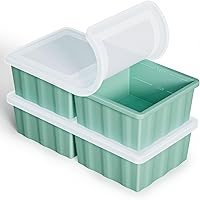
Are Silicone Freezer Containers Safe?
Yes, silicone freezer containers are generally safe when they are made for food use and used within their stated temperature limits. Check for food grade silicone, follow the maker's freezer and heating limits, and replace any tray that is cracked, warped, or retains strong odors.
On this page (13 sections)
- What does food grade silicone mean on a label?
- Are silicone freezer containers safe in the freezer?
- How do you read silicone container labeling before you buy?
- Can you put silicone freezer containers in the oven?
- How should you clean and care for silicone freezer trays?
- Which silicone tray suits large soup portions?
- Which silicone tray suits smaller portions for sauces?
- Which silicone tray suits a flexible everyday routine?
- What are the honest trade-offs between these trays?
- How do you freeze, store, and reheat food safely?
- What should you avoid with silicone freezer containers?
- Are silicone freezer containers safe for your freezer setup?
- Which silicone freezer container should you pick?
Yes, are silicone freezer containers safe as a general idea when they are food grade and used within their limits. The safety question is really about the material, the markings, and the temperature range for that specific tray.
Silicone stays flexible in the freezer and does not crack the way rigid plastic can. That flexibility makes frozen portions easy to push out without scraping.
The trade-off is softness, so a good tray needs a lid, reinforced edge, or frame to hold its shape when full.
What does food grade silicone mean on a label?
Food grade silicone means the material is made for contact with food. That wording matters more than a vague safety claim.
Xomoo describes its trays as BPA free food platinum grade silicone, and GGOW describes its tray as high quality silicone for food use. Check the whole item, including the lid, since the Xomoo 1/2 cup tray states its lid uses the same silicone.
Look for a stated freezer limit too. One Xomoo tray lists -8°F to 428°F, covering freezer storage and oven reheating.
Are silicone freezer containers safe in the freezer?
Yes, when the tray is rated for freezer use and food is cooled first. Silicone stays flexible in the cold, so cubes release with a gentle push.
That softness can cause sloshing when you carry a full tray. GGOW uses steel reinforced edges, and Xomoo uses a stainless steel frame to help full trays hold shape when moved or stacked.
Fill lines help prevent spills. The Xomoo 2 cup tray marks 250 ml and 500 ml, GGOW marks 1 cup and 2 cups, and the Xomoo 1/2 cup tray marks 2 oz, 4 oz, 50 ml, and 125 ml on two sides.
Leave headroom, since soup and sauce can expand as they freeze.
How do you read silicone container labeling before you buy?
Read the temperature range, food contact wording, and lid rating. Those lines tell you more than a broad safety claim.
The Xomoo 1/2 cup tray states -8°F to 428°F, and the Xomoo 2 cup tray states 428°F as its top limit. If a tray gives no lower limit, confirm it is made for freezer use before buying.
Confirm oven, microwave, and dishwasher use separately. GGOW states dishwasher, oven, and refrigerator use, while Xomoo describes oven and dishwasher use, but do not assume the lid shares those ratings.
Check size and count. The Xomoo 2 cup 2 pack makes four 500 ml portions, the GGOW 2 pack has two compartments per tray, and the Xomoo 1/2 cup 2 pack makes 12 half cup portions.
A kitchen food storage container guide can help compare shapes, but portion size comes first for freezer trays.
Can you put silicone freezer containers in the oven?
Only if the tray and any parts kept on it are rated for oven use. Freezer safe does not always mean oven safe.
The Xomoo 2 cup tray states 428°F and describes baking, freezing, and storing, while the Xomoo 1/2 cup tray also states 428°F plus oven, microwave, and dishwasher use. GGOW states oven use, but check the lid rating before heating with it on.
Heat without the lid if its rating is unclear, since a lid mainly protects food in storage and can trap steam. Use a flat baking sheet for support if the full tray feels soft, and read are souper cubes oven safe for more detail.
How should you clean and care for silicone freezer trays?
Wash with warm water and mild soap, and check for cuts, warping, and odors. Silicone tolerates dishwashers, but inspection keeps it in good shape.
GGOW describes its smooth surface as easy to clean, and Xomoo trays are dishwasher safe. Use a top rack in very hot dishwashers and dry fully before stacking.
Replace a tray that feels sticky, has deep cuts, or no longer flexes evenly. For odors from garlic, herbs, or tomato, try a long warm soapy soak, and retire the tray if the smell remains.
Which silicone tray suits large soup portions?
Choose a 2 cup tray if you freeze soup, stew, or sauce in meal size portions. Two cups is a practical single serving for many adults and a handy amount for cooking for two.
The Xomoo 2 cup tray is a 2 pack that makes four 500 ml portions. Each tray has two cavities marked at 250 ml and 500 ml, with a stated top temperature of 428°F and oven and dishwasher use.
Its clear lid seals each cavity separately, which helps when you freeze two different sauces or move the tray without mixing portions.
The tray measures 10.75 x 4.92 x 2.17 inches, so measure shelf depth before ordering. A tray that is too long will not freeze flat.
Which silicone tray suits smaller portions for sauces?
Choose a 1/2 cup tray if you freeze herbs, small sauces, or recipe amounts. Small portions thaw faster and reduce waste.
The Xomoo 1/2 cup tray makes 12 portions in total across the 2 pack. Each tray has six cavities.
Fill lines appear on two sides inside, at 125 ml, 50 ml, 4 oz, and 2 oz.
Xomoo states a range from -8°F to 428°F and describes oven, microwave, and dishwasher use. The lid is described as clear, sealing, and leak proof for each cavity.
The stainless steel frame inside helps the tray hold its shape when stacked.
This size suits a different job than a 2 cup tray. Use it for tomato paste, pesto, melted butter, or a small amount of stock.
For a broader look at portion shapes, see best freezer portion trays.
Which silicone tray suits a flexible everyday routine?
Choose a tray with reinforced edges if you move full trays often. A tray that bends in your hands is harder to carry without a spill.
The GGOW tray has two compartments per tray, marked at 1 cup and 2 cups. Each cube measures 2.16 x 4.13 x 4.13 inches, and the 2 pack holds up to 8 cups in total.
Steel reinforced edges give sturdier transport from counter to freezer, while the tight fitting lid helps protect food from refrigerator smells. The stackable shape also keeps the freezer neat.
The flexible non stick surface lets cubes pop out with a gentle push. GGOW states dishwasher, oven, and refrigerator use for soups, sauces, stews, leftovers, and ice cubes, so compare the best souper cubes alternative if you want another brand.
What are the honest trade-offs between these trays?
Portion size is the main trade-off, followed by shape and handling when full. None of these trays suits every food.
The Xomoo 2 cup tray suits large meals, the Xomoo 1/2 cup tray suits small amounts, and the GGOW tray is a 2 cup option with reinforced edges. Measure your shelf before buying, since fit can break the tie.
A frame or reinforced edge helps, but silicone will still flex, so carry a full tray on a sheet pan or board. Treat tray and lid as separate pieces unless the brand rates them together, and see our kitchen food storage container guide for a general comparison.
How do you freeze, store, and reheat food safely?
Cool food quickly, freeze it flat, label it, and reheat it to a safe temperature. The container only helps with storage.
Cool soup or sauce in shallow pans or an ice bath before filling a tray, since hot food can warp it and warm the freezer. FDA guidance notes food should be cooled before freezing for quality and safety.
Fill to the marked line, cover, and freeze flat, then move frozen cubes to a labeled bag if you need space. Label the food, portion size, and date.
Reheat until hot all the way through, with USDA guidance giving 165°F, and use a thermometer for dense foods. See rice in souper cubes for how portion shape affects freezing and reheating.
What should you avoid with silicone freezer containers?
Avoid broiler heat, sharp tools, and unlabeled trays with no temperature range. Those choices create the most risk.
Do not pry out a frozen cube with a knife. Push gently from the bottom, as GGOW describes, since a cut can collect bacteria.
Oven safe at 428°F is not broiler or stovetop safe, so follow the stated top temperature for tray and lid. Silicone can also hold strong odors, so reserve scented trays for tomato sauce or herbs and keep a clean one for stock or rice.
If a tray has no food contact wording or temperature range, do not use it for food.
Are silicone freezer containers safe for your freezer setup?
Yes, if the tray fits your shelf, freezes flat, and matches your portions. Safety is only part of the decision.
Measure length, width, and height with the lid on. The Xomoo 2 cup tray is 10.75 inches long and the Xomoo 1/2 cup tray is 11.8 inches long, and a tray that fits flat freezes faster and stacks better.
Leave space for airflow and for the lid to seal level. Check that your freezer stays at 0°F, since warmer storage can thaw food at the edges even in a good container.
For a fuller appliance check, see the Best Smart Top Freezer Refrigerator For Apartments for small spaces or the Best Smart Top Freezer Refrigerator For 2026 for current models.
Which silicone freezer container should you pick?
Pick the Xomoo 2 cup tray for large soup portions, the Xomoo 1/2 cup tray for small sauces, or the GGOW tray for a reinforced 2 cup option. All three are food grade silicone trays with lids, fill lines, and stated heat limits.
For one or two people freezing full meals, the 2 cup size saves measuring each time. The 1/2 cup size reduces waste for small amounts, and reinforced edges help if you move full trays often.
Before ordering, measure your shelf and check the temperature range and lid rating. Then read best freezer portion trays to match the tray to the foods you freeze most.
Frequently asked questions
Are silicone freezer containers safe for food?
Yes, food grade silicone containers are generally considered safe for freezing and reheating when used as directed. Look for markings that state food grade or food contact use, stay within the stated freezer and oven limits, and replace containers that are damaged or hold persistent odors.
Can silicone containers go from freezer to oven?
Some silicone freezer trays are made for that move, but not every container is. Check the stated upper temperature and confirm the tray, lid, and any frame or seal are all rated for oven use.
If the lid is not oven safe, remove it before heating.
How long does food last in silicone freezer containers?
The container does not extend food life on its own. Storage time depends on the food, how fast it was cooled, and how airtight the seal is.
Most cooked soups and sauces keep best for 2 to 3 months frozen, with quality checked before use.
Should I worry about BPA in silicone containers?
Silicone itself does not contain BPA, but check the full container, including lids and seals, for BPA free wording if that matters to you. The three trays in this guide are described by their brands as BPA free food grade or food platinum grade silicone.