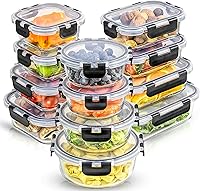
Food Storage Containers: The Complete Buying Guide
The right kitchen food storage container matches your food, storage space and care routine. Compare material, capacity, closure, temperature use and stacking before you buy.
On this page (14 sections)
- Food Storage Containers: The Complete Buying Guide
- What makes a good kitchen food storage container?
- How do you choose food storage container materials?
- Which food storage containers with lids suit different foods?
- How should you compare container sizes?
- What closure is best for food storage containers?
- Are these containers safe for the freezer and microwave?
- How do you organize food storage containers in a kitchen?
- How should you clean and care for food storage containers?
- What are alternatives to standard food storage containers?
- How do you choose food storage containers made in the USA?
- Which products fit common food storage needs?
- Explore food storage containers by topic
- Final decision: which kitchen food storage container should you buy?
Food Storage Containers: The Complete Buying Guide
The right kitchen food storage container keeps food organized, limits spills and fits the way you cook. Start with the food and storage space, then compare material, capacity, closure, temperature use and cleaning needs.
A container for dry flour has different priorities from one used for soup, lunch or freezer meals. Dry foods need a tight seal and enough room for scooping, while wet foods need a lid that can handle liquid without leaking in a bag or on a shelf.
A clear box can make leftovers easy to find, while a flexible silicone bag can use less space after it is empty. That difference matters in a small refrigerator, where rigid containers compete for every shelf and a soft bag can slide into a gap.
This guide compares the main choices for food storage containers kitchen shoppers face. It also shows how the materials, shapes and lid designs work in daily storage.
Think first about where food will live most often. Pantry storage rewards height and a wide opening, refrigerator storage rewards stacking and visibility, and freezer storage rewards a seal that stays reliable in the cold.
Think next about how the container will move. A lunch container needs a secure closure and a comfortable shape for carrying, while a bulk container can stay in one place and focus on freshness and easy access.
This guide compares the main choices for food storage containers kitchen shoppers face. It also shows how the materials, shapes and lid designs work in daily storage.
What makes a good kitchen food storage container?
A good kitchen food storage container has a suitable capacity, a secure lid and a shape that fits your storage area. It should also match the food's temperature, moisture level and expected use.
Look for these features before choosing:
- Capacity: Match the volume to a normal serving, leftover amount or bulk ingredient.
- Material: Plastic, silicone, glass and stainless steel each have different weight and care needs.
- Closure: Snap lids, clip-on lids and pinch seals help contain food in different ways.
- Leak resistance: Soups, sauces and dressings need a tighter seal than dry snacks.
- Shape: Rectangular containers often use shelf space well, while round containers can suit soups and other liquids.
- Care: Check whether the container is dishwasher safe and whether special cleaning steps apply.
- Temperature use: Freezer, microwave and oven use depend on the specific material and design.
A container is only useful when you can reach and identify what is inside. Clear walls, stackable shapes and consistent sizes can make a larger collection easier to manage.
How do you choose food storage container materials?
Choose the material by balancing weight, flexibility, visibility, heat use and cleaning. Compare non-plastic food storage containers if you want alternatives to plastic.
Plastic is light, silicone is flexible, glass is rigid, and stainless steel is useful for durable dry storage.
Plastic food storage containers
Plastic containers are light and easy to carry for lunches, meal prep and everyday leftovers. Clear plastic also helps you see the food without opening the lid.
The Rubbermaid Brilliance containers use BPA-free Tritan lids and bases, with clear walls, secure latches and a rectangular shape. The 4.7-cup containers are microwave, freezer and dishwasher safe, and built-in vents allow splatter-resistant microwaving with the lid on.
The DuraHome set uses BPA-free polypropylene and includes 24 round 32 oz containers with lids. They are microwave safe, freezer safe, top-rack dishwasher safe, stackable and reusable.
For a closer look at this material group, compare these best plastic food storage containers.
Silicone food storage bags
Silicone bags bend around food and take less rigid shelf space than boxes. They can suit leftovers, snacks, meal prep and travel when a flexible container is easier to pack.
The Stasher Half Gallon bag is made from platinum food-grade silicone and holds 64 oz. Its Pinch-Loc seal is designed for leak-free storage, and the bag is dishwasher safe, microwave safe and oven safe up to 425°F.
Stasher says the bag is free from lead, latex, phthalates, BPA and BPS. Care instructions say to use warm soapy water or the dishwasher and avoid turning the bag inside out.
See more flexible options in our guide to best reusable silicone food storage bags.
Glass food storage containers
Glass gives you a rigid container that makes the contents easy to see. It can be a good fit when you prefer a solid base for leftovers, but weight and breakage risk matter during transport.
Glass containers need enough space around them to prevent knocks against other items. Before using any glass container in a microwave, freezer or oven, follow the instructions for that specific design.
Our guide to the best glass food storage containers compares glass options by daily use and care needs.
Stainless steel food containers
Stainless steel can suit dry ingredients, packed meals and storage situations where a durable metal container is useful. For heating questions, see microwave-safe metal containers.
It is opaque, so you cannot check the contents without opening the lid.
The simplehuman Large Pet Food Storage Container has a brushed stainless steel exterior, a removable BPA-free inner bucket and an airtight lock-tight lid. It holds 30 to 35 lb of dry dog food, cat food or bird seed, and includes a measuring scoop that attaches magnetically under the lid.
Its size suits a known bulk-storage need rather than a small shelf. The 18.1 x 10.4 x 23.2 in footprint should be measured against your pantry, utility area or kitchen storage location.
For smaller metal containers with lids, see best stainless steel food containers with lids.
Which food storage containers with lids suit different foods?
The best food storage containers with lids depend on the food's moisture, shape and storage temperature. Use airtight or leak-resistant closures for wet foods, stackable boxes for leftovers, and large sealed containers for bulk dry ingredients.
Soups, sauces and stews
Liquid foods need a lid that closes securely around the entire container. Round 32 oz DuraHome containers are designed for soups, broths, sauces, yogurt and other foods that benefit from a leak-proof snap lid.
Leave space for handling and avoid filling any container beyond its practical capacity. A full container is harder to carry and more likely to spill if the lid is not seated correctly.
For flexible storage, a sealed silicone bag can also work for suitable foods. Check the opening and seal before moving it, then keep it upright when the food is especially liquid.
Compare options in our guide to the best leakproof food container.
Leftovers and meal prep
Leftovers are easier to manage when containers have clear walls, repeatable sizes and stackable shapes. The Rubbermaid Brilliance 4.7-cup containers are rectangular, clear and designed to stack.
A medium container can suit a serving or a modest portion of leftovers. Choose several matching sizes if you want a simple system, but do not buy a large set until you know which capacities your meals actually use.
For consistent meal portions, see how to use portion control containers.
For planned portions, see best meal prep containers and compare best portion control containers for meal prep.
Lunches and snacks
Lunch containers should be easy to carry, secure and simple to clean. The Rubbermaid Brilliance containers are light compared with many rigid alternatives and include secure latches, while Stasher's flexible half-gallon bag can fit snacks or other foods when a soft container is more convenient.
The best choice depends on whether you need a rigid base, a clear box or a bag that can compress after use. Pack wet foods only when the closure and orientation suit the meal.
Browse best food storage containers for lunch for more lunch-focused choices.
Dry pantry ingredients
Dry ingredients need protection from moisture, pests and accidental spills. A tight closure and a size that matches the ingredient's turnover are more useful than choosing the largest container available.
The simplehuman container is sized for 30 to 35 lb of dry pet food, cat food or bird seed, and its removable inner bucket supports cleaning. Its description also identifies flour, rice, sugar and charcoal as possible bulk-storage uses.
For smaller pantry foods, choose a container that leaves enough room to scoop without making the opening difficult to reach. Label opaque containers with the food name and date.
How should you compare container sizes?
Compare size by the amount of food you normally store, not by the largest capacity available. For larger meal storage, see large Pyrex storage containers.
A useful container leaves enough room for the food and fits your shelf, drawer, lunch bag or freezer.
Use these general starting points:
| Storage need | Useful container direction | Main feature to check |
|---|---|---|
| Sauces and small leftovers | Small container | Leak-resistant lid |
| One lunch or meal-prep serving | Small to medium container | Carrying comfort |
| Family leftovers | Medium to large container | Stackability and lid fit |
| Soup or broth | Round liquid container | Snap or locking closure |
| Bulk dry food | Large sealed container | Capacity and opening size |
| Flexible freezer storage | Silicone bag | Seal and freezer suitability |
Capacity labels are not always directly comparable across shapes. A 32 oz round container, a 4.7-cup rectangular box and a 64 oz silicone bag each occupy space differently.
A round container can suit soups because its shape matches the food, but it may leave awkward gaps beside rectangular containers on a shelf. A rectangular box often packs more neatly, while a silicone bag can flatten or bend around other items when stored.
Capacity also does not tell you much about fill level. A container marked with a full volume may be awkward to carry if you fill it to the brim, so leave room for a secure lid and safe handling.
Measure your shelf before buying a large container. The simplehuman model is 23.2 in tall, so height matters as much as floor area.
Check clearance for lifting the lid, removing an inner bucket or using a scoop without moving the container. A tall container can fit under a shelf yet still be hard to use if there is no room above it.
For larger options, see best large food storage containers with lids.
What closure is best for food storage containers?
Choose a closure based on how often you move the container and how much liquid it holds. Clip-on and snap lids suit regular meal storage, while airtight locking designs help with freshness and bulk dry foods.
Snap lids
Snap lids are quick to close and can work well for repeated meal prep. DuraHome uses snap closures on its round containers, which are designed for leak-proof storage.
A snap lid still needs to be pressed evenly around the container. Check every side before carrying soup or placing the container in a bag.
Clip-on lids
Clip-on lids use latches that hold the lid against the container. Rubbermaid Brilliance containers use secure latches and an airtight seal, while vents under the latches allow splatter-resistant microwaving with the lid on.
Clip-on lids can be useful when a container moves between the refrigerator, lunch bag and table. Keep the lid and base together so matching parts do not get mixed.
Locking lids and airtight seals
Locking lids are useful for foods where freshness, odors or spills are a concern. The simplehuman container uses a lock-tight handle and silicone gasket to form an airtight seal.
The phrase airtight does not mean food can stay safe forever. Follow suitable storage times for the food, cool and refrigerate food promptly, and inspect the container seal before use.
For more closure-focused choices, read best food storage containers with locking lids and best the best airtight food storage containers.
Are these containers safe for the freezer and microwave?
Freezer and microwave use depends on the specific container and its instructions. Do not assume that every plastic, silicone, glass or metal container works in every temperature setting.
The Rubbermaid Brilliance containers are identified as microwave safe, freezer safe and dishwasher safe. Their built-in vents allow splatter-resistant microwaving with the lid on.
The DuraHome containers are described as freezer safe and microwave safe, and the Stasher bag is identified for freezer, microwave and oven use up to 425°F. Stainless steel is not a microwave choice, so use a different container for reheating.
Before reheating, open or vent the lid as directed. Steam can build pressure in a sealed container.
Read what containers are microwave safe for a more detailed comparison.
How do you organize food storage containers in a kitchen?
Organize containers by size, shape and use so the pieces you need most often stay within reach. Keep lids with their matching bases, use vertical space when possible and reserve large containers for foods that justify their footprint.
A simple system works well:
- Group containers by size.
- Store lids upright or in a separate divider.
- Keep lunch and meal-prep containers near your usual packing area.
- Place freezer containers close to the freezer.
- Label opaque containers with contents and dates.
- Remove damaged or warped pieces from regular use.
- Keep a small number of spare containers instead of filling every shelf.
Stackable containers help reduce wasted shelf space. Rubbermaid Brilliance containers are designed to stack, and DuraHome containers are also described as stackable.
For refrigerator layout ideas, see best food storage containers for fridge and best stackable food storage containers.
Specialized refrigerator sections can also affect where containers belong. Our guide to using specialized storage zones for better food safety explains how storage zones can support a more organized routine.
How should you clean and care for food storage containers?
Clean containers according to their material and care instructions. Remove food residue promptly, wash lids as carefully as bases and dry every part before closing it for storage.
Dishwasher-safe products can reduce daily work, but check whether the lid has a specific rack requirement. DuraHome containers are identified as top-rack dishwasher safe, while Rubbermaid Brilliance containers are dishwasher safe.
Stasher recommends warm soapy water or the dishwasher and says not to turn the bag inside out because that could cause it to rip. Let flexible bags dry fully before sealing them for storage.
A removable inner bucket makes the simplehuman container easier to clean. Empty bulk food before washing and dry the interior completely before refilling.
If you are comparing materials for food-contact concerns, read how to choose food storage containers for food safety.
What are alternatives to standard food storage containers?
Standard boxes are not the only way to store prepared food. Vacuum-sealer containers, portion molds and reusable silicone bags can solve specific storage problems when ordinary boxes do not fit your routine.
Vacuum-sealer containers can help when reducing air exposure is part of your storage plan. They need the right compatible system and should be used according to the container and sealer instructions.
See best vacuum sealer containers for food storage for that category.
For soups, sauces and single portions, freezer molds can create repeatable shapes that are easy to stack. Compare best Souper Cubes alternatives if you want a different portion-storage approach.
Silicone bags are another alternative when a rigid box takes too much room. The Stasher half-gallon bag is flexible, clear and designed for repeated use across several kitchen tasks.
How do you choose food storage containers made in the USA?
If manufacturing location matters to you, check the current product details for the exact model before buying. Country-of-origin information should be confirmed for the specific container, since a brand's general reputation does not guarantee where every product is made.
Brands can make products in more than one place, and a product line can change suppliers over time. That means a general statement about a company is not a reliable guide to the item in your cart.
Look for the exact size, material and model you plan to buy. Small differences in a product line can matter, so confirm the details for that version rather than relying on a nearby listing or an older description.
Keep the same practical checks in view while you compare location. Material, capacity, closure, care and temperature suitability still decide whether a container fits your routine.
A container made in the place you prefer is only useful if its shape and lid work for your food. Location should sit alongside those checks, not replace them.
You can compare options in best food storage containers made in the USA. Use the same checks as with any other container: material, capacity, closure, care and temperature suitability.
If a listing does not state the origin clearly, treat it as unconfirmed. That approach protects you from buying on assumption and keeps the decision tied to facts you can check.
Save your notes on size and use before you shop. A short list makes it easier to compare models on the same basis and to spot missing details.
Which products fit common food storage needs?
The four products in this guide cover different storage patterns rather than one universal container style.
The simplehuman container is the largest and most specialized option here. Its 30 to 35 lb capacity, airtight lock-tight lid, magnetic scoop and removable BPA-free inner bucket suit bulk dry food storage.
Rubbermaid Brilliance is a more compact choice for everyday leftovers, lunches and meal prep. Its 4.7-cup rectangular containers are clear, stackable and supplied as a 2-pack with lids.
Stasher offers flexible storage in a 64 oz half-gallon silicone bag. It suits buyers who want a reusable bag for meal prep, leftovers, freezer storage, microwave use or oven use up to 425°F.
DuraHome is the quantity-focused option. Its 24 round 32 oz BPA-free polypropylene containers with lids suit soups, sauces, broths, salads, yogurt and batch cooking where having many matching pieces matters.
Explore food storage containers by topic
Final decision: which kitchen food storage container should you buy?
Choose a Rubbermaid Brilliance container for clear, stackable everyday leftovers and lunch portions. Pick DuraHome when you need many 32 oz containers for soups, sauces or batch cooking.
Brilliance suits a home where visibility and tidy stacking matter most. Its rectangular shape helps containers sit neatly in a refrigerator, and clear walls make it easier to spot food before it is forgotten.
DuraHome suits a different rhythm, with many matching pieces for batch cooking and portioning. Having extra containers on hand can help when several meals need storage at once, and round shapes can suit soups and other liquid foods.
Choose Stasher when a flexible 64 oz silicone bag fits your freezer, meal-prep or travel routine. Pick simplehuman when you need a large airtight container for 30 to 35 lb of dry food and have enough vertical storage space.
Stasher suits buyers who want storage that takes less rigid space and can move from freezer to microwave or oven within its stated limits. The simplehuman container suits a known bulk need, such as pet food or another dry staple, rather than everyday leftovers.
The best kitchen food storage container is the one whose material, size, closure and care needs match your actual food routine. Start with your most common storage task, then measure the space before buying.
Measure shelf height, fridge space and the path you will carry containers through your kitchen. A container that fits on paper can still be awkward if it is hard to lift, open or clean.
Match the container to the food you store most often, then add variety only where it solves a clear problem. That keeps the system simple and avoids filling shelves with pieces that rarely get used.
Frequently asked questions
What should I look for in a kitchen food storage container?
Choose a container by the food you store, the space available and how you plan to use it. Check capacity, material, closure, leak resistance, temperature ratings, cleaning instructions and whether the shape stacks well in your refrigerator, freezer or pantry.
Are food storage containers with lids better than bags?
Containers with lids give rigid support and stackable shapes, while reusable bags use less space when empty and can suit flexible foods. Pick rigid containers for leftovers and organized shelves, or silicone bags for freezer storage, travel and foods that benefit from flexible storage.
What size food storage container do I need?
Use smaller containers for sauces, snacks and single portions, medium containers for leftovers and meal prep, and larger containers for bulk foods. Match the container to the amount you normally store, while leaving room for safe handling and easy access.
Which material is best for food storage containers?
Plastic is light and practical for daily transport, glass gives a rigid surface for many kitchen uses, silicone bags save space when empty, and stainless steel suits dry storage or situations where a durable metal container is useful. The best choice depends on weight, care and temperature needs.