Built-In vs Integrated Fridge: Which Fits Your Kitchen? (October 2026)
Choose a built-in fridge for a visible, fitted appliance; choose an integrated fridge when you want it concealed behind a cabinet door. Check the cabinet plan, door clearance and installation needs before deciding.
On this page (7 sections)
- Built-in vs integrated fridge: what is the difference?
- Which design suits the look you want?
- How do the cabinet and installation needs differ?
- Which one is easier to clean and maintain?
- What does each style mean for storage and daily use?
- How should you compare the total project cost?
- Which fridge should you choose?
Choose a built-in fridge for a visible appliance fitted into cabinetry, or an integrated fridge for a cabinet-front look. The right choice depends on how much of the appliance you want to see, the cabinet plan and the space needed to open the doors.
The terms can be used differently by manufacturers, so compare installation drawings and door details for the exact model. In general, built-in describes a fridge designed to fit a planned opening while remaining visible; integrated describes one concealed behind a matching cabinet front.
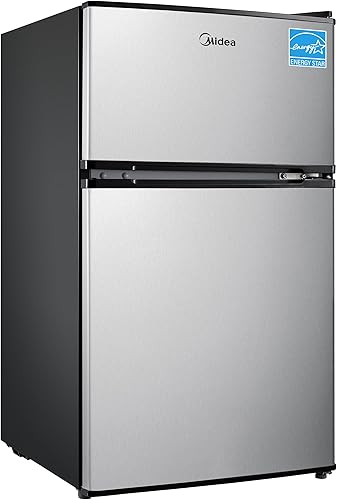 Best for a freestanding extra
Midea 3.1 Cu.ft Mini Fridge with Freezer

Built-in vs integrated fridge: what is the difference?
A built-in fridge shows its appliance front, while an integrated fridge is covered by a cabinet door. Both are planned as part of the kitchen, but their fronts create different visual effects.
A built-in model can have a finished metal or colored door that reads as an appliance. It may sit flush or nearly flush with nearby cabinets when the design, opening and installation allow.
An integrated model uses a cabinet panel on the fridge door. That panel lets the refrigerator blend with surrounding cupboards, though the handle, seams and panel gaps can still be visible.
Check how each manufacturer defines the terms before ordering. Look for the installation type, required opening dimensions, hinge system, ventilation path and whether a cabinet front is supplied separately.
Is a built-in fridge always flush with cabinets?
No. The term alone doesn't guarantee a flush finish.
Depth, handle projection, cabinet trim and door swing all affect how the fridge sits in the room.
Review the installation guide and elevation drawings with your kitchen designer or installer. A small depth mismatch can make a fridge stand proud or leave a gap that disrupts the planned cabinet line.
Does an integrated fridge disappear completely?
It blends into the cabinetry, but it doesn't become invisible. The panel edges, handle, toe kick and ventilation details remain part of the design.
The panel also adds weight to the door and must fit the appliance's specified dimensions. Ask who will supply and install it, and confirm the hinge can handle that panel.
Which design suits the look you want?
Choose built-in if you want the fridge to read as a deliberate appliance; choose integrated if you want a continuous cabinet front. Both can work in a well-planned kitchen.
Built-in suits rooms where stainless steel, black, white or another appliance finish is part of the design. It can also provide a visual anchor beside ovens or other visible appliances.
For a cabinet-led look, integrated lets cabinet color and grain continue across the refrigerator doors. The result depends on panel matching, alignment and the details around neighboring drawers.
Browse modern kitchen design ideas with smart fridges to consider how appliances fit into a broader kitchen plan. If the fridge itself will remain visible, compare smart fridge color options before selecting cabinet and counter finishes.
A distinctive finish can be part of that plan too. See whether you can get a fridge in a brass color if a warm metal look suits your room.
How do the cabinet and installation needs differ?
Both styles need a correctly sized opening, a planned ventilation route and access to required connections. Integrated installation adds the cabinet panel and its hinge alignment to the work.
Start with the appliance's installation document, not a general cabinet measurement. Check the cutout width, height and depth, plus the clearances needed at the back, sides and top.
Measure the route from the entry door to the kitchen as well as the final opening. A fridge that fits the cabinetry can still be difficult to deliver through a narrow doorway or turn.
For an integrated fridge, confirm the panel dimensions, thickness, weight limit and attachment points. Make sure the finished panel can open without hitting a wall, counter or adjacent handle.
Built-in doors also need swing clearance. Check whether drawers or islands obstruct the door, and whether the model allows a hinge position that works in your layout.
What should you ask the installer?
Ask who is responsible for the cabinet opening, electrical connection, water line if required, panel, handle and final leveling. Confirm those details before cabinets are built.
Also ask how the appliance can be removed for service. A clean, close fit is less useful if a technician cannot reach the refrigerator without damaging cabinetry.
Which one is easier to clean and maintain?
Neither style is automatically easier to maintain; access and the manufacturer's care instructions matter most. A visible door is straightforward to wipe, while an integrated panel needs care suited to its cabinet material.
Built-in finishes may show fingerprints or smudges, depending on the surface. Follow the appliance maker's cleaning directions and avoid products that could damage the finish.
For an integrated model, clean the cabinet panel as you would the surrounding cabinetry. Keep liquids away from panel edges and hardware, and use the cabinet maker's recommended cleaner.
Both types need accessible ventilation areas and periodic checks of door seals and interior cleanliness. Don't block vents with stored items or decorative trim.
Lighting can shape the feel of the kitchen as well as the fridge's appearance. For ideas, see how smart fridge lighting can set kitchen ambiance.
What does each style mean for storage and daily use?
Choose based on the interior capacity and layout of the exact fridge, not whether its front is visible or paneled. The exterior style does not tell you how much food it holds or how the shelves are arranged.
Compare usable capacity, shelf spacing, drawers, door storage and freezer layout. Think about the containers and grocery items you use most, and check whether shelves can be adjusted.
Consider who uses the fridge and how often. A visible screen, controls or dispenser may matter to some households, while others prefer a plain cabinet front.
If the kitchen is a family hub, a separate display can help keep schedules in view. The Amazon Echo Show guide covers an option for placing a kitchen screen nearby; the Echo Show 15 has customizable widgets for calendars and to-do lists.
For a compact overflow space, the Midea 3.1 Cu.ft Mini Fridge with Freezer is a freestanding model, not a built-in or integrated replacement. The Upstreman 3.2 Cu.Ft Mini Fridge with Freezer is another freestanding compact option when a separate room needs extra cold storage.
How should you compare the total project cost?
Compare the full kitchen project, including the appliance, cabinet work, panel and installation. The fridge price alone won't show the cost of achieving the finished look.
An integrated design may need a matching panel, specialized hinges and careful alignment. A built-in model may require a specific opening, trim or ventilation work even when its appliance front remains exposed.
Get an itemized quote before choosing between designs. Include delivery, fitting, electrical or plumbing work where needed, and the cost of repairing or modifying cabinets if the opening changes.
Plan for replacement too. A future model may have different dimensions or hinge requirements, so ask whether the cabinet design leaves a practical path to service and replacement.
Which fridge should you choose?
Pick built-in if you want a visible appliance fitted into the kitchen; pick integrated if a continuous cabinet-front look is your priority. Confirm the installation details and interior capacity for the exact model before committing to either style.
If the cabinet layout is still flexible, settle the fridge dimensions, door swing and ventilation needs before finalizing cabinetry. If the kitchen is already built, measure the opening and compare it with the installation guide.
Choose a separate compact fridge only for a secondary storage need. A built-in vs integrated fridge decision is about the main kitchen installation and should be matched to an appliance designed for that setup.
Frequently asked questions
Is a built-in fridge the same as an integrated fridge?
No. A built-in fridge is fitted into a planned cabinet opening but usually keeps its own visible appliance front.
An integrated fridge is designed to sit behind a cabinet door, so it blends more fully with the surrounding kitchen.
Check each model's installation instructions because product terms can vary.
Can any fridge be made integrated?
No. An integrated fridge needs a design and door arrangement made for cabinet-front installation.
A standard freestanding fridge generally needs its own clearance and visible door, and enclosing it can restrict ventilation or interfere with opening.
Confirm the exact installation method before changing cabinetry.
Which fridge is easier to replace?
A freestanding or visible-front built-in model may be simpler to identify and replace, but the opening dimensions and utility connections still matter. Integrated replacements also need to match the cabinet door system and hinge arrangement.
Record the model dimensions and installation details before shopping.
Does an integrated fridge reduce storage space?
It can, depending on the cabinet opening and the appliance chosen. Cabinet panels, hinges and ventilation requirements affect the usable space around the fridge, while the internal capacity depends on the model.
Compare the stated usable capacity and measure the opening rather than judging by the front appearance.
Can I use a mini fridge as a built-in kitchen fridge?
A freestanding mini fridge is not automatically suitable for enclosure in cabinetry. For example, the Midea and Upstreman compact fridges described here are freestanding models.
Use one as a separate extra only where its manual allows, and choose a purpose-designed built-in or integrated model for a fitted kitchen.

