How to Choose Food Storage Containers Non Toxic
Choose non toxic food storage containers by checking the food-contact material, seal, heat limits and manufacturer safety details. Match the container to how you store, reheat and clean food.
On this page (7 sections)
- What should you check in non toxic food storage containers?
- Which food-contact materials fit different storage jobs?
- How do seals and lids affect food safety?
- How should you use non toxic containers in a refrigerator?
- Can you use these containers in an oven or freezer?
- What safety documents should a manufacturer provide?
- Which container suits your routine?
Choose food storage containers non toxic by checking four details that sit behind any label claim. The food-contact material tells you what touches your food day after day.
The seal tells you how well that food stays contained. The temperature limits tell you where the container belongs.
The manufacturer safety documentation ties those points to one exact product.
A container that fits your cooking habits is easier to clean, close and use within its intended range. That fit matters more than a general promise on the box.
Think about whether you store dry goods, leftovers, liquids or frozen portions most often. Then match the material and closure to that routine.
Look for clear wording such as platinum food-grade silicone or BPA-free polypropylene. Clear wording helps you compare products without guessing.
It also helps you spot gaps, such as a named body material with no detail on the lid or gasket. Those gaps deserve a second look before you buy.
Also check whether the container is meant for a pantry, refrigerator, freezer, microwave or oven. One material may have different limits depending on the product design.
A bag rated for oven use up to a stated temperature is not the same as a rigid tub rated only for freezer and microwave use. A dry-goods canister is different again.
Set-up starts before the first fill. Read the care instructions and note whether heat, cold or both are allowed.
Note whether the lid, seal or gasket has separate care needs. Note whether sharp tools, high heat or long storage should be avoided.
Those notes will guide daily use from the start.
Care shapes safety over time. Wash promptly, dry fully and inspect the seal and rim before reuse.
Replace a container when cracks, warping or a damaged closure stop it from closing cleanly. Keep the product instructions with the container so limits stay clear for everyone who uses it.
For a broad overview of shapes, lids and storage uses, start with this kitchen food storage container guide. Use that overview to narrow the style you need.
Then check the material, seal, temperature range and care guidance for the exact model you choose.
What should you check in non toxic food storage containers?
The best choice depends on the full food-contact system, not just the word “non toxic.” Review the container body, lid, gasket or seal, coatings, temperature range and cleaning method together.
1. Identify the food-contact material
A manufacturer should name the material that touches your food. Common examples include glass, silicone and polypropylene, but a material name alone does not tell you whether the lid, seal or coating has the same composition.
Check whether the product identifies its food-contact material and whether it names substances it excludes. For example, Stasher describes its bag as platinum food-grade silicone and says it is free of lead, latex, phthalates, BPA and BPS.
2. Check coatings and inner surfaces
Coatings can affect how you use a container, especially when food is hot, acidic or oily. If a product has a coating, look for clear care instructions and a stated temperature range.
Avoid scraping an interior with sharp tools if the maker does not recommend it. A damaged surface may be harder to clean, even when the original material was suitable for food storage.
3. Match the seal to the food
A snap lid can work well for portioned meals, while a flexible bag may suit irregular shapes. An airtight seal can help keep dry foods contained, but it does not make perishable food safe at room temperature.
Use leak-resistant storage for soups, sauces and dressings only when the container is closed correctly. Leave space for expansion when freezing liquids, and keep containers upright until the contents are solid.
4. Read temperature and care limits
Microwave-safe, freezer-safe, oven-safe and dishwasher-safe are separate claims. Confirm each one before moving a container from the freezer to a microwave or oven.
The Stasher bag is marked safe for the dishwasher, microwave and oven up to 425°F. DuraHome containers are described as freezer-safe, microwave-safe and top-rack dishwasher-safe.
Those instructions should guide daily use.
Which food-contact materials fit different storage jobs?
Choose the material that matches the task you repeat most often. For help matching container sizes to servings, see how to use portion control containers.
Flexible silicone suits irregular loads and reheating, polypropylene suits stackable portions, and a removable inner bucket suits large dry storage.
Platinum silicone for flexible storage
Platinum silicone can be useful when you want a flexible container that folds around food. Compare reusable silicone food storage bags for another flexible option.
The Stasher Half Gallon bag has a 64 oz capacity, a Pinch-Loc seal and a clear design that makes the contents visible.
Its half-gallon format can suit leftovers, meal preparation and bulk snacks. The bag is one piece, so you do not have a separate rigid lid to store, but you must still clean the seal area carefully.
Stasher says the bag should not be turned inside out because that could cause it to rip. Warm soapy water or the dishwasher gives you two cleaning options within the stated care guidance.
BPA-free polypropylene for portioned meals
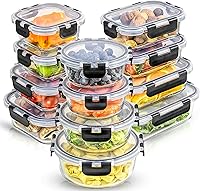
Polypropylene can suit buyers who want rigid, clear containers for soups, sauces, fruit, salads and snacks. The DuraHome set has 32 oz containers with snap lids, and the set contains 24 containers.
The round shape and stackable design can help when you prepare several portions at once. DuraHome describes the containers and lids as freezer-safe, microwave-safe and top-rack dishwasher-safe.
Use the containers within those stated limits. Check that the lid is vented or loosened as needed before microwaving, and let hot food cool according to your normal food-handling routine before long-term storage.
BPA-free inner buckets for large dry goods
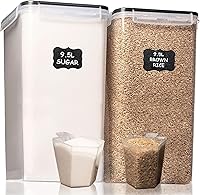
Large dry goods need a different shape from individual meal portions. The simplehuman container has a removable BPA-free inner bucket, an airtight seal and capacity for 30 to 35 lb or 14 to 16 kg of dry dog food, cat food or bird seed.
Its brushed stainless steel exterior can suit a pantry or feeding area where you want a tall container. The inner bucket lifts out for cleaning, which helps when dry food dust collects at the bottom.
This container is designed for dry storage rather than microwave or oven use. simplehuman also describes it for bulk pantry items such as flour, rice and sugar, so label the container clearly when switching between uses.
How do seals and lids affect food safety?
A good seal helps keep food contained, but clean handling and correct storage temperature still matter more than airtightness alone. Pick the closure that matches the food and the way you retrieve it.
For dry food, a lock-tight lid can reduce access and help keep contents contained. For liquids, a leak-resistant snap lid or Pinch-Loc seal can reduce spills when the container stays upright.
If a tight seal is your main need, compare these best food storage containers with locking lids. For flexible and rigid alternatives, see the guide to best non plastic food storage containers and the comparison of the best leakproof food container.
Inspect the lid, gasket and rim after washing. Remove food residue before the next use, and replace a container if cracks, warping or a damaged seal prevents it from closing cleanly.
How should you use non toxic containers in a refrigerator?
Use containers that fit the food, shelf and cooling plan. Leave room for air circulation, avoid crowding warm food into a packed refrigerator, and keep containers closed after the food has cooled enough for storage.
Start with cooling. Hot food packed tightly can slow cooling and warm nearby items.
Let food cool safely before sealing large portions, since smaller portions cool faster and fit shelves better.
Shelf fit matters next. Measure the space you have for leftovers and meal prep.
A flexible bag can tuck into a narrow gap or rest on its side. A rigid round tub stacks predictably and reads clearly from the front.
Choose a shape you can see, reach and return without forcing it. That ease makes daily use more likely and prevents damage to lids and seals.
Organize raw ingredients, prepared food and ready-to-eat items so spills are less likely to spread. Separation lowers the chance that a leak reaches food that will not be cooked later.
A clear container makes leftovers easier to identify and helps you use food in turn. Note the contents and the date you stored them on a label so you can plan which items to use first.
Keep lids clean and dry before closing. Moisture and residue around the rim can stop a seal from seating well, so wipe the rim, check the gasket or seal channel and close the container fully.
Specialized refrigerator areas may also help. Read Using Specialized Storage Zones for Better Food Safety for ideas on separating foods.
Then see Smart Fridge Cooling Zones: Customize Your Food Storage if your refrigerator supports adjustable zones.
Use those zone ideas with container choice, not instead of it. Clean containers promptly after use, wash, rinse and dry them fully before the next fill.
Inspect lids and seals each time, since a damaged seal or warped lid may leak even when the body looks fine. Never rely on an airtight seal to extend safe storage beyond normal food handling.
Can you use these containers in an oven or freezer?
Use an oven only when the exact container is marked oven-safe and the temperature limit is clear. Never assume freezer-safe means oven-safe, or microwave-safe means broiler-safe.
Stasher states an oven limit of 425°F, along with microwave and freezer use. That stated range gives a clear boundary for reheating and cooking.
Stay within that limit and follow the stated care guidance.
DuraHome is described for freezer and microwave use, but not as an oven container. Treat that gap as a limit, not a detail to test.
Transfer food to an oven suitable dish when baking or roasting is the goal.
Keep the tubs for cold storage, freezing, portioning and microwave reheating within their stated use. The simplehuman container is intended for dry storage, for dry food and bulk pantry items.
That role does not extend to oven, microwave or freezer use, so keep it in the feeding area or pantry.
Freezing needs its own care. Liquids expand as they freeze, so leave expansion room in every tub and bag.
Keep containers upright until the contents are solid.
A flexible bag can lie flatter once frozen, but it still needs headroom at the seal. Avoid forcing a frozen lid open and let the container warm slightly until the lid loosens with normal pressure.
Microwave use also needs a check each time. Confirm that the exact container is marked microwave-safe.
Loosen or vent the closure as directed, and follow the stated limits for the lid as well as the body.
If the material or seal is not intended for microwave use, transfer the food first. Dishwasher care follows the same rule of exact claims, since top rack placement, hand washing or full dishwasher use can differ by model.
Dry the seal area fully after washing so it closes cleanly next time. For portioning frozen meals, you may also want to read are souper cubes oven safe and rice in souper cubes before choosing a freezer format.
Plan the full path from storage to table. Note where the food will chill, freeze, reheat and serve, and choose a container rated for each step you will actually use.
What safety documents should a manufacturer provide?
Look for material names, excluded substances, temperature limits, care instructions and intended uses. Those five points form the core of useful safety documentation.
Together they let you judge fit without relying on a broad label alone.
A useful manufacturer page should let you connect claims to the exact product. Check the model name, model number and size against the claims.
A half gallon bag and a smaller bag may not share the same limits.
Material names should be precise. Platinum food-grade silicone reads differently from silicone with no grade stated.
BPA-free polypropylene reads differently from plastic with no type named. That precision helps you compare containers on equal terms.
Excluded substances add useful context when the maker names them. Free of lead, latex, phthalates, BPA and BPS is a clear list to check.
No list at all leaves you with less to go on. Treat the list as product specific and read it beside the temperature and care lines.
Temperature limits should be stated as clear ranges or clear yes or no lines. Oven use up to 425°F is a clear boundary.
Freezer-safe and microwave-safe are separate claims and should be stated in the same place.
Dry storage only is also a clear boundary when a container is not meant for heat or cold. Care instructions complete the picture.
Note washing method, lid care, seal care and any warning about turning a bag inside out.
For broader food-contact guidance, review the FDA food contact substances information. The FDA explains how substances used in food contact materials are evaluated.
That background helps you read product claims with more context, but you still need to follow the container's own instructions.
Keep the instructions available if you use the same container for pantry storage, freezing and reheating. A saved page or a stored leaflet beats memory when a limit question comes up.
Look for intended uses that match your routine. Soups, sauces, salads, meal prep, sous vide, snacks and dry bulk storage each call for a different shape and closure.
A snap lid, a Pinch-Loc seal and a lock-tight lid each fit a different job.
Keep a short note with each container. Note the material, the temperature limits and the washing method.
That note turns safety documentation into a daily habit for anyone else in the kitchen.
Which container suits your routine?
Choose the Stasher Half Gallon bag if flexible silicone storage and stated microwave, oven and freezer use matter most. Its 64 oz format suits leftovers, meal preparation and bulk snacks.
The Pinch-Loc seal and clear body help you pack irregular loads and see the contents at a glance. Follow the stated care guidance, including the warning not to turn the bag inside out.
Choose DuraHome if you need many 32 oz portions with snap lids for soups, sauces and meal prep. The 24 set format suits a routine built around portioning and stacking.
The round BPA-free polypropylene tubs are described as freezer-safe, microwave-safe and top-rack dishwasher-safe. Use them within those stated limits and check the lid before reheating.
Choose the simplehuman container if your priority is large dry-food storage with an airtight lock-tight lid and a removable BPA-free inner bucket. Its capacity suits typical 30 to 35 lb bags of dry pet food, and the magnetic scoop stays with the lid.
The brushed stainless steel exterior suits a pantry or feeding area where a tall canister fits best. Keep it for dry storage and label it clearly if you switch uses.
For any option, confirm the material, seal, temperature range and care instructions before the first use. Match the container to the job you repeat most often.
That match keeps cleaning simple, storage tidy and daily use within the stated limits.
Frequently asked questions
What makes food storage containers non toxic?
Food storage containers described as non toxic should have a clearly named food-contact material, such as platinum silicone, BPA-free polypropylene or a BPA-free inner bucket. Check the maker's safety information, intended temperature range and care instructions before using a container for hot, frozen or reheated food.
Is silicone safer than plastic for food storage?
Silicone and plastic have different properties, so neither label alone answers every safety question. Compare the exact material, food-contact claims, temperature limits and cleaning directions.
Platinum silicone can suit flexible storage, while BPA-free polypropylene can suit stackable meal portions when used within its stated limits.
What should I check before microwaving a food container?
Check that the exact container is marked microwave-safe and follow its care instructions. Open or loosen the closure if directed, avoid using a container beyond its heat limit, and transfer food when the material or seal is not intended for microwave use.
Are airtight containers better for food safety?
An airtight or leak-resistant seal can help contain food and limit spills, but it does not replace safe refrigeration or clean handling. Choose a seal that fits your food type, leave room for expansion when freezing, and clean the container fully before reuse.