Microwavable Stainless Steel Food Containers: Safe?
Most stainless steel food containers should not go in the microwave unless the container and its instructions clearly allow it. Stainless steel can reflect microwave energy, cause arcing, and heat food unevenly, so use a labeled microwave-safe alternative when in doubt.
On this page (7 sections)
- Are stainless steel food containers microwave safe?
- What does a microwave-safe label actually mean?
- What limits matter when a metal container is labeled safe?
- What are safer alternatives to stainless steel for reheating?
- How should you reheat food in a microwave-safe container?
- How should you store stainless steel containers if they cannot go in the microwave?
- What is the safest choice for microwavable food storage?
Most stainless steel food containers should not go in the microwave unless the container and its instructions clearly allow it. Stainless steel can reflect microwave energy, cause arcing, and heat food unevenly.
That risk is easy to miss because stainless steel feels sturdy and familiar in a kitchen. A container that stores leftovers well is not automatically built for heating, and the difference matters once the microwave starts running.
The safest rule is simple: use the microwave-safe label and the container instructions together. If the label is missing, damaged, or unclear, move the food to a container made for microwave heating.
Read the label for the base first, then check each extra part on its own. A lid, clip, seal, or sleeve may have a different limit from the container itself, so do not assume one approval covers them all.
Those limits can include heating time, power level, lid position, and whether the container can move from freezer to microwave. Follow the narrowest instruction when the parts do not match.
Food-safe wording does not settle the question either. It speaks to contact with food, not to heating behaviour, so it should not be used as a stand-in for microwave approval.
For broader storage choices, see our guide to kitchen food storage containers. If you are comparing materials, our guide to what containers are microwave safe covers the main options.
Both guides help you sort storage from reheating before you choose a container. That check takes a minute, and it can prevent sparks, uneven heating, and damage to the microwave.
If you already have food in a stainless steel container and the instructions are silent, do not test it in the microwave. Transfer the food to a labeled container and keep the steel container for storage, chilling, or transport.
Are stainless steel food containers microwave safe?
Stainless steel food containers are generally not microwave safe unless the manufacturer specifically approves microwave use. The metal may reflect microwave energy instead of allowing the food to heat normally.
A stainless steel container can also have sharp corners, seams, handles, or dents. Those areas may increase the chance of arcing, especially if the container is close to the microwave wall.
A label that says “food safe” does not mean “microwave safe.” Food-safe describes contact with food, while microwave-safe describes heating use under stated conditions.
Do not rely on the word “reusable” either. A reusable container may be intended for refrigeration, freezing, transport, or hand washing without being suitable for microwave heating.
For more detail on metal cookware and microwave risks, read can you microwave metal food containers.
What does a microwave-safe label actually mean?
A microwave-safe label means the container has been identified for microwave use under specific conditions. It does not mean every part of the container can go in the microwave at every power level or for unlimited time.
Check the container, lid, sleeve, clips, and any removable parts separately. A container may allow the base in the microwave while requiring the lid to be removed, loosened, or replaced with a vented cover.
Look for instructions about:
- Maximum heating time
- Microwave power level
- Lid position
- Venting or steam release
- Empty heating
- Freezer-to-microwave use
- Contact with the microwave wall
Follow the narrowest instruction. If the base is microwave safe but the lid is not, remove the lid before heating.
The U.S. Food and Drug Administration provides general information about microwave oven radiation and safe use.
Stop heating immediately if you see sparks, smoke, or damage.
What limits matter when a metal container is labeled safe?
A microwave-safe metal container still has limits, so follow the exact instructions instead of treating the label as a blanket approval. The container may require space around it, a particular position, or a short heating cycle.
Avoid placing any metal container against the oven wall. Do not use a container with a bent rim, exposed sharp edge, damaged coating, or loose metal part.
Never microwave an empty container. Food or liquid should be present to absorb energy when the instructions allow the container to be used.
Use short heating intervals and check the food between intervals. Stir food when practical, because a metal container can contribute to uneven heating even when its use is approved.
Do not assume a microwave-safe label covers foil, metal clips, stainless steel lids, or decorative metal trim. Each part needs clear approval.
What are safer alternatives to stainless steel for reheating?
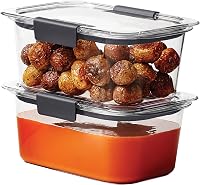
A container made for microwave heating is usually the simpler choice for leftovers. For product options, compare Rubbermaid Brilliance food storage containers.
Choose one with clear instructions, a lid that has a stated microwave limit, and a size that suits the portion you normally reheat.
Glass can work well when it carries a microwave-safe label, but thermal shock still matters. Read are glass containers microwave safe before moving a cold glass container directly into a hot heating cycle.
Plastic containers also vary. Check the material, microwave label, and lid instructions rather than assuming every food-storage box has the same limits.
When does PROMOZE make sense?
The PROMOZE 50-Pack Reusable Meal Prep Containers Microwave set suits batch meal prep when you want single-compartment plastic containers that can move from freezer storage to microwave warming. Each container is rectangular, has a snap lid, holds 28 oz, and is BPA-free plastic.
The set includes 50 containers with lids. The containers are described as microwave safe, freezer safe, and dishwasher safe on the top rack, while the design uses 1 compartment.
Choose this set when you need many matching containers for lunches, prepared meals, or takeout portions. Skip it if your priority is stainless steel, glass, or a non-plastic storage system.
When does Bentgo Prep make sense?
Bentgo Prep suits reusable meal prep with larger 1-compartment bowls and custom-fit lids. The set includes 10 bowls and 10 lids, with a 6.75-cup volume and embossed volume markings for portion planning.
The bowls are microwave safe, freezer safe, and top-shelf dishwasher safe. The lids are not microwave safe, so remove them before heating.
Bentgo describes the materials as free of PFAS, BPA, vinyl, lead, and PVC.
Choose Bentgo Prep when portion markings and reusable bowls matter. Remember that its microwave instruction applies to the trays, not the lids.
When does HorizonNest make sense?
HorizonNest [100% Eco-Friendly] 34 oz Disposable Food suits one-time food storage, takeout, or meal packing when you want a plant-fiber alternative to plastic. The rectangular containers use bagasse, include lids, hold 34 oz, and are described as compostable, disposable, freezer safe, and microwave safe.
The containers are also described as heat resistant, leak resistant, and stackable. Their 1000 ml capacity suits salads, entrees, fruit, and other larger portions.
Choose HorizonNest when compostable packaging and a larger portion size fit your routine. Skip it if you need a long-term reusable container, since these are disposable.
How should you reheat food in a microwave-safe container?
Remove any non-microwave-safe lid, loosen an approved lid for steam, and heat in short intervals. Keep the container centered and follow its instructions for power and timing.
Do not seal a container tightly while heating. Steam needs a safe path to escape, and a sealed lid can create pressure.
Use oven mitts when removing a heated container. Food and steam may be hot even when the container feels comfortable to touch.
Stir dense foods halfway through heating when possible. Let the food stand briefly before eating so heat can spread through the portion.
If you see sparks or hear repeated popping, stop the microwave and let the container cool before removing it. Do not continue because the arcing appears minor.
How should you store stainless steel containers if they cannot go in the microwave?
Use stainless steel for storage, chilling, transport, or serving only when those uses match its instructions. Move food to a labeled microwave-safe container before reheating.
Keep stainless steel containers dry between uses and avoid stacking them while wet. For appearance and care, see how to clean stainless steel without leaving streaks.
A finish does not determine microwave compatibility. Fingerprint Resistant vs Regular Stainless Steel explains the surface difference, but neither finish should be treated as microwave approval.
If you want stainless steel for cold storage, compare the best stainless steel food containers with lids and check each container's heating instructions separately.
What is the safest choice for microwavable food storage?
The safest choice is a container with a clear microwave-safe label and instructions that cover the base and lid separately. Stainless steel is not a default microwave material, even when the container is food safe, reusable, or designed for meal storage.
Pick PROMOZE for a large 50-piece plastic set, Bentgo Prep for reusable bowls with portion markings, or HorizonNest for 34 oz disposable bagasse containers. For more options, compare the best microwave-safe food storage containers.
When the label is missing or the instructions are unclear, transfer the food before heating. That small step avoids sparks, uneven heating, and damage to the microwave.
Frequently asked questions
Can you microwave stainless steel food containers?
Usually, no. Stainless steel can reflect microwave energy and may cause sparks or uneven heating.
Use a stainless steel container only when its instructions and microwave compatibility label clearly approve that use, and follow every limit about lids, empty heating, timing, and placement.
Why does stainless steel spark in a microwave?
Metal reflects microwave energy, and sharp edges, seams, dents, or close contact with the oven wall can create arcing. Sparks can damage the oven or start a fire.
Stop the microwave immediately if you see flashes, hear popping, or smell burning.
Can stainless steel lids go in the microwave?
Do not microwave a stainless steel lid unless the container instructions specifically allow it. Many containers use metal lids, clips, or seals that are not approved for microwave use, even when the food container itself has a microwave compatibility label.
What should you use instead of stainless steel for reheating?
Choose a container marked microwave safe, then follow its instructions about lids, vents, power, and heating time. Plastic, glass, and plant-fiber containers can have different limits, so the material alone does not replace the microwave-safe label.