Vacuum Sealer Bags vs Rolls: Which Should You Choose? (November 2026)
Choose rolls if your portions vary in size, and precut bags if you seal the same portions every week. Rolls let you cut each bag to fit, while precut bags save the measuring and sealing step on one end.
On this page (13 sections)
- Vacuum sealer bags or rolls: the quick verdict
- Bags and rolls side by side
- Convenience: precut bags save time you may not need
- Food packaging waste: rolls usually waste less
- Sizing: width matters more than format
- Thickness and seal strength: what the numbers mean
- Compatibility: match the material to your machine
- Cost per bag: think in portions, not pack size
- Storage and kitchen space: bags stack flat, rolls need room
- Who should buy precut bags
- Who should buy rolls
- Care, safety and reuse: handle both formats the same way
- Final verdict: vacuum sealer bags or rolls
Choose rolls if your portions vary in size, and precut bags if you seal the same portions every week. In this vacuum sealer bags or rolls comparison, custom sizing usually wins on waste, while precut bags win on speed.
Rolls let you match each bag to the food in front of you. You cut the length you need, seal one end, load the food, then vacuum seal the open end.
Precut bags arrive ready to load. You skip the measuring and first seal, which helps when you seal dozens of identical portions in one session.
Most of the products in this comparison are rolls. That trend reflects the main trade-off, since rolls give you more control over size and waste.

 Best for mixed widths
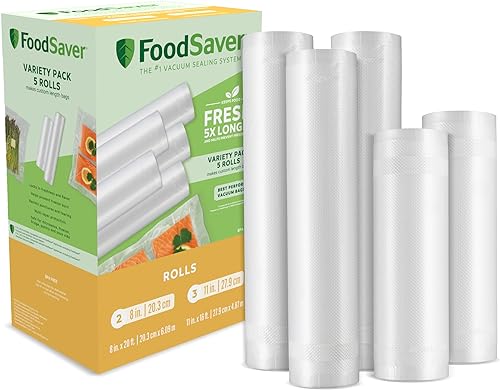
FoodSaver Custom Length Vacuum Sealer Bags Multipack
Vacuum sealer bags or rolls: the quick verdict
Rolls are the better default for most households. They reduce wasted material when portion sizes change from week to week.
Precut bags make sense when you meal prep the same portions on a schedule. If you seal 10 identical chicken portions every Sunday, a ready-made bag saves a few minutes.
Our score weighs specs, features and buyer feedback against what you are shopping for. FoodSaver's multilayer construction and BPA-free material appear across the top picks here.
The FoodSaver Custom Fit Airtight Food Storage rolls score highest at 9.7. Their 8-inch width suits smaller portions, and the pack of three gives you flexibility without a wide bag's excess.
Bags and rolls side by side
Precut bags trade sizing freedom for speed, and rolls trade one extra sealing step for less waste. If you're comparing vacuum sealing with everyday storage bags, see vacuum sealing vs Ziploc bags.
Neither format seals better on its own if the material matches your machine.
| Factor | Precut bags | Rolls |
|---|---|---|
| Sizing | Fixed length and width | Cut to any length |
| Waste | High when size misses | Low, sized per portion |
| Speed | Fastest to load | One extra seal per bag |
| Storage | Flat stack of bags | Rolls need upright or shelf space |
| Best use | Identical weekly portions | Mixed foods and changing portions |
A food vacuum sealer guide helps you match material to your machine before you compare formats. FoodSaver material is designed for FoodSaver systems, while EverFresh states wider compatibility.
Check your machine's sealing bar and channel before you buy either format. If you're still choosing a machine, compare upright vacuum sealer options.
The material must seal cleanly at the bar temperature, or air will leak back in.
Convenience: precut bags save time you may not need
Precut bags save about one sealing step per bag, and that saving grows only when you seal many bags at once. For a few packs a week, the difference is small.
You still need to load food, position the bag opening in the vacuum channel and run the cycle. Rolls add measuring, cutting and sealing the first end.
That extra step takes less than a minute for most users. If you seal two or three bags a week, the time saved rarely justifies giving up custom sizing.
Precut bags also come in fixed sizes, so you may need two or three sizes to cover your foods. Rolls cover every size with one width.
Our guide on how to use vacuum sealer bags walks through loading and sealing in order. You can apply the same steps to a roll you have just cut and sealed.
Food packaging waste: rolls usually waste less
Rolls waste less material because each bag fits the food, while precut bags waste material when the fixed size is too large. FoodSaver says custom length helps you avoid waste and bags that do not quite fit.
A precut bag that is several inches longer than the food leaves empty plastic at the sealed end. That empty section still needs a clean seal, and it adds bulk in the freezer.
A roll lets you cut close to the food's length. You leave room for the sealing bar, then cut, so little plastic goes unused.
EverFresh makes the same point about cutting a roll to the required size. Small items need small bags, and a long precut bag would use more material than needed.
Rolls also help you label and stack flat packs. Flat packs store more food in the same freezer space than loose precut bags with extra length.
Sizing: width matters more than format
Choose width by your largest regular food, not by format. An 8-inch width suits small portions, and an 11-inch width fits most large cuts.
The FoodSaver Custom Fit Airtight Food Storage rolls measure 8 x 20 ft, in a pack of three. That width fits chicken breasts, fish fillets, sandwich portions and flat meal prep packs.
The FoodSaver Custom Fit Vacuum Sealer Rolls measure 11 x 16 ft, also in a pack of three. The wider width leaves room around roasts, brisket portions and whole fish.
The FoodSaver Custom Length Vacuum Sealer Bags Multipack includes both widths, with two 8 x 20 in rolls and three 11 x 16 in rolls. You can match the width to each food.
EverFresh rolls measure 11 x 25 ft, in a four pack. The longer rolls suit frequent sealers who want to avoid changing rolls mid-session.
If you seal mostly meat, our best vacuum sealer bags for meat guide turns those widths into specific cuts. Measure your largest roast across its widest point before you pick a roll.
Thickness and seal strength: what the numbers mean
Thicker embossed material helps remove air and resist punctures, but thickness alone does not guarantee a seal. The seal depends on material, machine temperature and a clean sealing surface.
EverFresh states 15% thicker embossing, with a 15 mil embossed layer and a 3.5 mil smooth layer. FoodSaver describes its material as multilayer with an airtight design.
Embossing creates channels that help air leave the bag during vacuum sealing. A deeper channel can help with sharp edges or liquid that moves during sealing.
Smooth layers add strength where the bag flexes in the freezer. FoodSaver says its multilayer design protects contents from freezer burn and spoilage for up to 5 times longer than nonvacuum storage.
Thicker material also resists punctures from bones and shells. That matters for bone-in cuts and frozen foods that shift in storage.
Working with a best vacuum sealer bag holder can keep a roll steady while you cut and seal the first end. A steady roll helps you keep the seal strip clean and straight.
Compatibility: match the material to your machine
Buy material made for your machine's sealing system, and check the exact brand it lists. FoodSaver material is designed for FoodSaver vacuum sealing systems.
All three FoodSaver picks state that they work with FoodSaver systems. That match matters because the sealing bar heats to a temperature set for that material.
EverFresh states compatibility with FoodSaver and all other vacuum sealer machine brands. That wider claim can help if you own a non-FoodSaver machine or plan to change machines.
Generic material can work across brands, but you should still test one bag first. Seal a short piece, pull the seal gently and check that it holds.
If a seal fails, check for food or liquid on the sealing strip before you blame the format. Wipe the strip, dry the bag opening and try again with a clean edge.
Our best vacuum sealer bags for food guide compares material types across brands. Use it to match a roll or bag to the machine you already own.
Cost per bag: think in portions, not pack size
Rolls often cost less per sealed portion because you size each bag, while precut packs can cost more when you discard oversized bags. Compare cost by how many portions a pack yields for your foods.
A roll's yield depends on your portion lengths. Short portions from an 8-inch roll yield more bags than long roasts from an 11-inch roll of the same length.
Precut bags yield a fixed count, but only if every bag fits a food you seal often. Unused sizes in a variety pack add cost without adding portions.
FoodSaver lists a 5-pound load capacity for the multipack material. That figure helps you judge whether a bag can hold a heavy cut without stressing the seal.
Think about freezer turnover too. A cheaper bag that seals poorly and leaks air wastes the food inside, which costs more than any material saving.
Buy a smaller first pack if you are unsure of your portion lengths. Measure three typical foods, then calculate how many bags each roll would yield.
Storage and kitchen space: bags stack flat, rolls need room
Precut bags store flat in a drawer or box, while rolls need space to stand or lie without bending. Neither format takes much room, but rolls are less flexible.
A roll can kink if you force it into a narrow cabinet. A kinked roll can make cutting crooked and sealing harder on the first end.
Store rolls upright in a holder, or lay them flat in a wide drawer. Keep them away from heat and sharp edges that can puncture the outer layer.
Precut bags stack in a box and slide into a drawer. That flat storage suits small kitchens where counter space is already tight.
The multipack with five rolls needs more shelf space than a single roll. Plan where all five rolls will sit before you buy a variety pack.
A nesco vs-12 deluxe vacuum sealer review shows how machine size and storage interact in a real kitchen. Measure your cabinet before you add rolls or a holder.
Who should buy precut bags
Buy precut bags if you seal identical portions on a repeat schedule and value speed over sizing. Weekly meal prep is the clearest case for this format.
You may seal 10 chicken portions, 6 soup packs or 12 smoothie packs in one session. Precut bags remove the measuring step from each one.
Precut bags also help if you share sealing with others who may not want to cut and seal a first end. They open a bag, load food and run the cycle.
Choose this format only when the fixed size matches your portions closely. Measure your containers and portion sizes before you commit to a pack.
If your portions change with sales or seasons, precut bags will leave you with unused sizes. A roll handles that variation without extra packs.
Who should buy rolls
Buy rolls if your foods vary in size, if you seal large cuts, or if reducing waste matters to you. Most home users fall into this group.
Gardeners, hunters, bulk shoppers and batch cooks all seal different sizes in the same month. A roll adapts to each one without a new pack.
The FoodSaver multipack suits households that seal both small portions and large cuts. You pick the 8-inch roll for fillets and the 11-inch roll for roasts.
EverFresh suits frequent sealers who want thicker material and longer rolls. Four 11 x 25 ft rolls reduce how often you replace a roll.
The FoodSaver Custom Fit Vacuum Sealer Rolls suit larger cuts as the main use. Their 11-inch width leaves sealing room around big items.
If your fridge layout affects where you store sealed food, our 4-Door vs 3-Door French Door Fridges: Which to Choose? guide helps you plan freezer space. Flat sealed packs fit full-width shelves more easily than bulky bags.
Care, safety and reuse: handle both formats the same way
Both bags and rolls need the same care once sealed, since safety depends on storage temperature and clean seals. FoodSaver states its material is BPA-free and safe for raw and cooked foods.
All three FoodSaver picks are listed as safe for freezer, refrigerator, microwave and boiling. EverFresh also states BPA-free material, made of food grade PA/PE.
Follow the microwave warning for EverFresh material. You must puncture the bag before microwave use so steam can vent.
Wash reusable bags and dry them fully before you seal them again. EverFresh states that washed and dried bags can be reused, and FoodSaver lists its rolls as reusable.
Date each sealed pack with the food and the sealing date. Even with a strong seal, rotation keeps older food from staying in the freezer too long.
Store sealed food at safe temperatures, and use a fridge thermometer to check the setting. Our Smart Fridge Screen Size Options: Choose the Best Fit guide helps you read fridge displays clearly.
Final verdict: vacuum sealer bags or rolls
Pick rolls if your portions vary, and pick precut bags if you seal identical portions every week. That single rule settles most cases in this vacuum sealer bags or rolls decision.
For mixed foods, the FoodSaver Custom Length Vacuum Sealer Bags Multipack gives you both widths. You can cut a small bag for a fillet and a large one for a roast from the same box.
For narrow portions only, the FoodSaver Custom Fit Airtight Food Storage rolls fit well. Their 8-inch width reduces excess on chicken, fish and meal prep packs.
For large cuts, the FoodSaver Custom Fit Vacuum Sealer Rolls give you 11 inches of width. That room helps the seal sit clear of the food.
For thicker material and longer rolls, EverFresh offers a four pack with heavier embossing. Check that it seals cleanly on your machine before you buy in bulk.
Start with the width that matches your largest regular food, then adjust for the smaller items you seal most often. That order keeps waste low and seals clean.
Frequently asked questions
Are vacuum sealer bags or rolls better for beginners?
Rolls are often easier for beginners because you cut each bag to fit the food you have. You avoid buying precut sizes that turn out too small for a roast or too large for a single portion, and leftovers from a roll can become the next bag.
Do precut bags waste less than rolls?
Precut bags waste less time but can waste more material when the fixed size does not match the food. Rolls waste less material because you size each bag, though you use a small extra amount each time you seal a new bag end.
What width roll should I start with?
Start with 11-inch material if you seal meat, roasts or whole fish, because it leaves room around larger items. Add an 8-inch roll for chicken portions, snacks and flat meal prep packs where a wide bag would fold and trap air.


