What Is the Best Size Refrigerator for a Family of Four?
On this page (8 sections)
For a family of four, the best refrigerator size is typically between 20 and 25 cubic feet. This range offers enough space for groceries without feeling too large for your kitchen. It provides a good balance for weekly food storage and meal prep needs.
Choosing the right refrigerator involves more than just cubic feet, though. You’ll want to consider your family’s eating habits and shopping frequency. We found that families who cook at home often need more space than those who dine out often. Thinking about how you use your fridge helps pick the perfect model.
- Aim for 20-25 cubic feet for a family of four.
- Consider your family’s unique eating and shopping habits.
- Look at interior layout and special features.
- Measure your kitchen space carefully before buying.
- Balance budget with desired features and size.
Ready to find out exactly what size refrigerator is best for your family? Let’s walk through all the important considerations, so you can make an informed decision.
Choosing the Right Refrigerator Size for Your Family
For most families of four, a refrigerator between 20 and 25 cubic feet is a great starting point. This range usually provides enough storage without overwhelming your kitchen space. But let’s dig a little deeper into what those numbers really mean for you.
Understanding Cubic Feet: What Does It Mean for Your Family?
Cubic feet refers to the total interior volume of your refrigerator, including both the fresh food and freezer compartments. Think of it like a measurement of how many grocery bags you can fit inside. A larger number means more room for food.
We found that families with active children often need more space. School lunches, after-school snacks, and meal prepping all add up. If you cook often and buy in bulk, you’ll definitely appreciate the extra room.
How Your Lifestyle Impacts Refrigerator Needs
Your family’s daily habits play a huge role in determining the ideal size. Do you eat out frequently? Or is your kitchen the heart of every meal? We found that families who enjoy cooking at home tend to need larger refrigerators.
- Frequent cooks: If you prepare most meals at home, plan for a larger capacity. You’ll need space for ingredients, leftovers, and meal prep containers.
- Bulk shoppers: Do you love warehouse stores? A bigger fridge can handle those economy-sized purchases.
- Fresh food enthusiasts: If your diet is rich in fruits and vegetables, you’ll need more fresh food storage space.
- Leftover savers: Many families save leftovers for lunch or future dinners. This requires good container space.
Conversely, if you dine out often or have limited cooking needs, you might get by with a smaller end of the 20-25 cubic foot range.
Beyond Size: Key Features to Look For
Cubic feet is just one part of the puzzle. The internal layout and specific features can make a smaller fridge feel enormous, or a large one feel cramped. It’s all about how you use the space.
Interior Layout and Organization
How the shelves, drawers, and door bins are arranged matters a lot. We found that adjustable shelving is a top priority for many families. This allows you to customize the space for tall bottles or large platters.
- Adjustable shelves: Look for shelves that can move up, down, or even split. This flexibility is a game-changer for storing oddly shaped items.
- Crisper drawers: Do you buy lots of produce? Good crisper drawers with humidity controls help keep fruits and vegetables fresh longer (FDA).
- Door storage: Ample door bins are great for condiments, drinks, and smaller items. Some even have gallon-sized storage.
- Freezer organization: Baskets, dividers, and multiple drawers in the freezer help prevent a “frozen tundra” where food gets lost.
Fresh Food vs. Freezer Space
Most refrigerators have a fresh food section and a freezer. The proportion of each can vary. Think about what your family uses more. Do you freeze a lot of meals? Or do you mostly need fresh food storage?
Many models offer about two-thirds fresh food storage and one-third freezer space. This ratio works well for most families. However, if you have a separate chest freezer, you might opt for a fridge with a smaller freezer compartment.
Refrigerator Styles and Their Impact on Space
The style of refrigerator you choose also affects how usable the internal space feels, as well as its footprint in your kitchen. Each style has its pros and cons for a family of four.
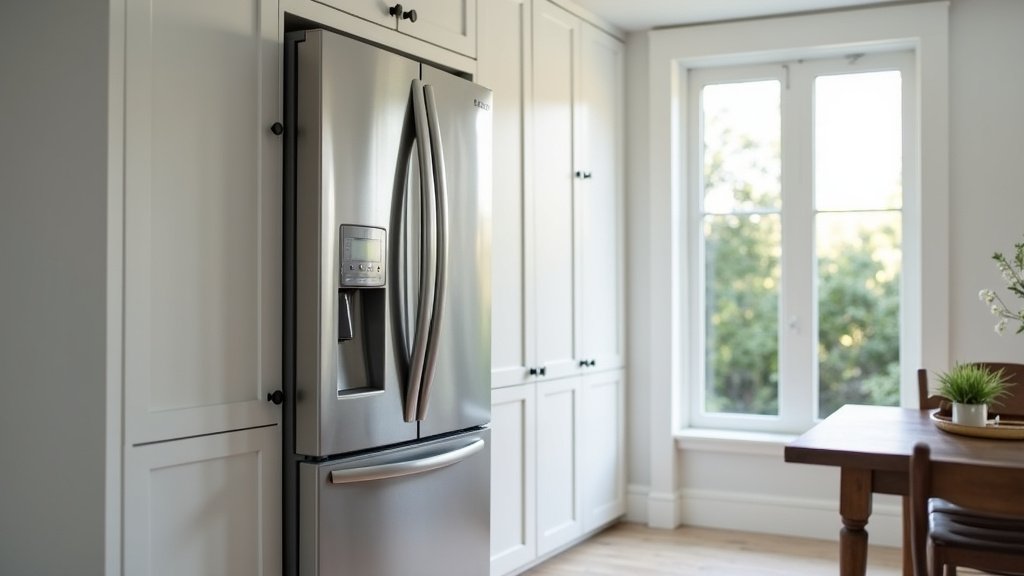
French Door Refrigerators
These are very popular for families. They feature two doors for the fresh food section and usually a freezer drawer below. We found that the wide shelves are great for platters and large items.
Pros:
- Wide fresh food storage for big items.
- Easy access to frequently used items.
- Less door swing, which is good for smaller kitchens.
Cons:
- Can be more expensive.
- The bottom freezer drawer might require more bending.
Side-by-Side Refrigerators
Side-by-side models have a full-height freezer on one side and a full-height refrigerator on the other. This style offers good visibility for both sections.
Pros:
- Excellent freezer organization with shelves and bins.
- Ice and water dispensers are common.
- Narrow door swing, suitable for tight spaces.
Cons:
- Narrow fresh food shelves can make storing wide items difficult.
- Less overall fresh food storage compared to French door models of the same cubic footage.
Top-Freezer and Bottom-Freezer Models
These are more traditional styles. Top-freezer models are often the most budget-friendly. Bottom-freezer models put fresh food at eye level.
Pros (Top-Freezer):
- Generally less expensive.
- Good energy efficiency.
Cons (Top-Freezer):
- Frequent bending to access fresh food.
- Freezer section can be less organized.
Pros (Bottom-Freezer):
- Fresh food at eye level.
- Often good fresh food capacity.
Cons (Bottom-Freezer):
- More bending to access freezer items.
- Freezer can be a large bin, making organization harder.
Measuring Your Space: A Critical First Step
Before you even start looking at models, grab a tape measure. This is perhaps the most important step. We’ve heard too many stories of families falling in love with a fridge only to find it doesn’t fit.
Dimensions to Measure
You need to measure more than just the width of the opening. Consider the depth and height, too. Don’t forget about door clearance!
- Width: Measure the width of your refrigerator opening. Leave at least an inch on each side for air circulation (Energy Star).
- Height: Measure from the floor to the bottom of any cabinets above. Account for hinges.
- Depth: Measure from the back wall to the front of your counters. Decide if you want a counter-depth or standard-depth model.
- Door swing: Make sure the doors can open fully without hitting walls, islands, or other appliances.
- Entry path: Can the new refrigerator physically fit through your doorways, hallways, and kitchen entry?
It’s always better to measure twice and buy once. Having these numbers handy will save you a lot of headache.
Budgeting for Your New Refrigerator
Refrigerator prices can vary wildly based on size, style, and features. We found that setting a budget early helps narrow down your choices. A family-sized refrigerator is an investment, so consider its lifespan.
Prices for a 20-25 cubic foot refrigerator can range from $1,000 to over $3,000. French door models and those with advanced features (like smart technology or built-in coffee makers) will be at the higher end.
Don’t forget to factor in potential delivery and installation costs. Also, consider the energy efficiency of the model. An Energy Star certified refrigerator might cost a bit more upfront but can save you money on your electricity bill over time.
Your Refrigerator Sizing Checklist
To help you make the best decision, here’s a quick checklist to review:
- Have you estimated your family’s weekly food volume?
- Does the interior layout support your preferred organization style?
- Have you decided on your ideal fresh food to freezer ratio?
- Will the chosen refrigerator style fit well in your kitchen design?
- Did you meticulously measure all kitchen and entry dimensions?
- Is the refrigerator within your budget, including delivery and energy costs?
Conclusion
Choosing the right refrigerator for your family of four doesn’t have to be overwhelming. You’ve learned that a 20 to 25 cubic foot model is a great starting point. But remember, your family’s unique habits, kitchen layout, and budget are just as important as the numbers. We found that taking the time to measure and consider your lifestyle ensures you pick a fridge you’ll love for years.
Now, grab your tape measure and those handy checklists. You’re ready to confidently select the perfect refrigerator to keep your family’s food fresh and organized.
Frequently Asked Questions
How does a counter-depth refrigerator differ from a standard-depth one?
A counter-depth refrigerator is designed to sit flush with your kitchen cabinets, typically around 24-25 inches deep. A standard-depth model extends further out, often 30-36 inches deep. While counter-depth offers a sleeker look, it usually has less interior capacity for the same width.
Should I get a refrigerator with an ice and water dispenser for my family?
Many families find built-in ice and water dispensers very convenient. They encourage hydration and save space by not needing a separate water pitcher. However, they can take up freezer space and might be a point of maintenance down the road.
Is it better to buy a refrigerator with a larger fresh food section or freezer section?
This depends on your family’s eating and shopping habits. If you cook daily with fresh ingredients and rarely freeze food, prioritize a larger fresh food section. If you buy in bulk, freeze meals, or store a lot of frozen snacks, more freezer space will be beneficial.
Do I need to worry about the direction my refrigerator doors open?
Absolutely! The door swing is critical, especially in smaller kitchens or near islands. Ensure the doors can open fully without hitting walls, cabinets, or other appliances. Some models offer reversible doors, which can be a lifesaver for tricky layouts.
How much space should I leave around my refrigerator for proper ventilation?
Most manufacturers recommend leaving at least 1/2 to 1 inch of space on the sides and back of your refrigerator. This allows for proper airflow, which is essential for the unit’s efficiency and longevity. Check your specific model’s installation guide for precise recommendations.