What Is the Difference Between Counter-depth and Standard-depth?
On this page (3 sections)
The main difference between counter-depth and standard-depth refrigerators is their depth measurement. Counter-depth models are designed to sit nearly flush with your kitchen cabinets, while standard-depth refrigerators stick out further.
Choosing between them affects both your kitchen’s look and layout. One offers a sleek, built-in appearance. The other provides more storage space but might break your cabinet line. It really comes down to your priorities and available kitchen space.
- Counter-depth refrigerators are shallower.
- Standard-depth refrigerators offer more internal space.
- One creates a seamless kitchen aesthetic.
- The other is often more budget-friendly.
Ready to figure out which one is right for your home? Let’s break down everything you need to know about these two refrigerator types.
Understanding Counter-Depth vs. Standard-Depth Refrigerators
Let’s get right to it. The primary difference between these refrigerator types boils down to one key measurement: depth. This measurement dictates how far the appliance sticks out from your kitchen cabinets. It affects both how your kitchen looks and how you can move around in it.
What is a Standard-Depth Refrigerator?
Think of a standard-depth refrigerator as the traditional choice. These models are built for maximum internal storage. They typically range from 30 to 36 inches deep, not counting the handles. This depth allows for plenty of space to store groceries for a busy family.
The Benefits of Standard-Depth
You’ll often find that standard-depth refrigerators offer more cubic feet of storage. If you buy groceries in bulk or have a larger household, this extra space can be a huge plus. They’re generally more affordable, too. Manufacturers can produce them more efficiently due to their common design.
- More storage capacity: You get more room for food.
- Lower price point: Often easier on your budget.
- Wider selection: Many styles and features available.
The Downsides of Standard-Depth
The main drawback? A standard-depth refrigerator will likely stick out past your countertops and cabinets. This can interrupt the clean lines of your kitchen. It might also make your kitchen feel a bit more cramped, especially in smaller spaces (Consumer Reports).
- Protrudes from cabinets: Breaks the kitchen’s aesthetic flow.
- Can make kitchens feel smaller: Less floor space visible.
- Less “built-in” look: Not as sleek as other options.
What is a Counter-Depth Refrigerator?
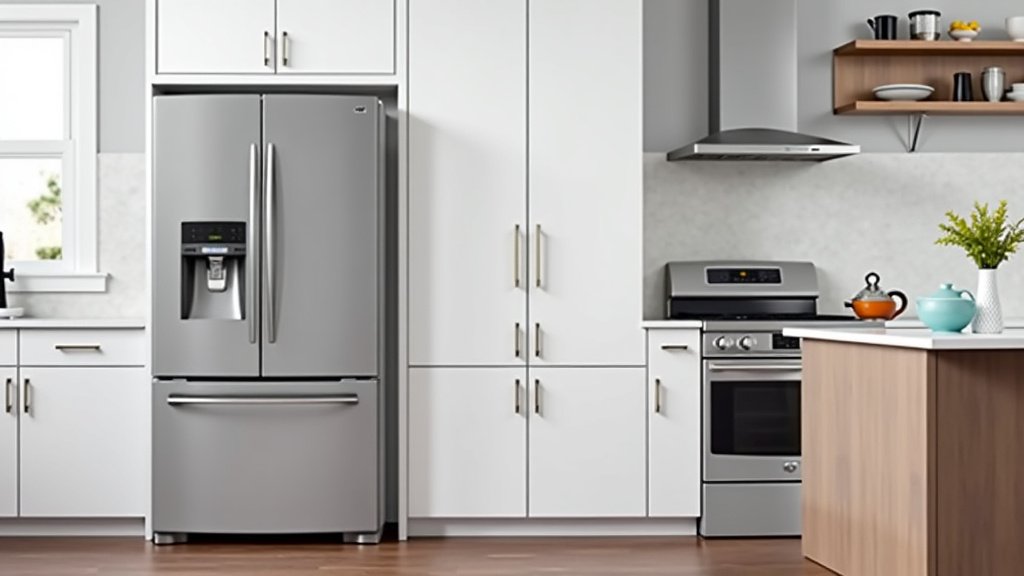
A counter-depth refrigerator is designed with aesthetics in mind. Its depth is shallower, usually between 24 and 26 inches (excluding handles). The goal is for the front of the fridge to align more closely with your kitchen countertops and cabinetry. This creates a much more integrated, custom look.
The Benefits of Counter-Depth
The biggest advantage here is the sleek, built-in appearance. Your kitchen will look more streamlined and custom-designed. This can make a smaller kitchen feel larger and more open. It’s perfect if you value visual harmony.
- Seamless kitchen aesthetic: Aligns with counters.
- Creates a custom look: Appears built into the space.
- Better traffic flow: Less protrusion means easier movement.
The Downsides of Counter-Depth
While attractive, counter-depth fridges do come with some compromises. You’ll typically get less internal storage space compared to a standard-depth model of the same width and height. This is simply due to their shallower design. They also tend to be more expensive. This is because they often use specialized components to maximize internal volume within a compact shell (Appliance Retailer Magazine).
- Less storage capacity: Can be challenging for larger families.
- Higher price tag: Generally more costly to purchase.
- Fewer options sometimes: The selection might be smaller.
Key Measurement Considerations for Your Kitchen
Before you even think about buying, you need to measure. We cannot stress this enough! Accurate measurements will save you a lot of headaches later on. Grab a tape measure and let’s go.
Measuring Your Space
First, measure the width of the opening where your refrigerator will go. Then, measure the height from the floor to the top of your cabinets. Finally, and this is crucial, measure the depth from the wall to the front edge of your countertop. Remember to account for any baseboards or wall molding. You also need to think about door swing. Will the refrigerator doors open fully without hitting a wall or island?
Standard Refrigerator Dimensions
While sizes vary by brand, here are some typical dimensions to help you visualize:
| Dimension | Standard-Depth Refrigerator (Approximate) | Counter-Depth Refrigerator (Approximate) |
|---|---|---|
| Depth (excluding handles) | 30 – 36 inches | 24 – 26 inches |
| Width | 28 – 36 inches | 28 – 36 inches |
| Height | 67 – 70 inches | 67 – 70 inches |
Keep in mind that these are just averages. Always check the exact specifications of any model you’re considering. Don’t forget to add an inch or two for air circulation around the back and sides of the unit (Energy Star).
Making the Right Choice for Your Home
So, how do you decide which type is best for you? It really comes down to your lifestyle, budget, and kitchen design goals. Think about what matters most to you.
Prioritizing Storage vs. Style
Do you prioritize maximum storage for a big family? Or do you dream of a kitchen with a sleek, custom look? If storage is king, a standard-depth model is likely your best bet. If you want that high-end, integrated aesthetic, then counter-depth is worth the extra cost and potential storage compromise.
Considering Your Kitchen Layout
Is your kitchen spacious, or is it on the smaller side? In a galley kitchen or one with a narrow walkway, a standard-depth fridge might create a bottleneck. A counter-depth unit will allow for easier movement and an unobstructed path. In a large, open-concept kitchen, the visual impact of a protruding fridge might be less noticeable, but the seamless look of a counter-depth still adds a touch of elegance.
The Budget Factor
Let’s be realistic: budget plays a huge role. Counter-depth refrigerators often come with a higher price tag. We found that they can be anywhere from 10% to 30% more expensive than comparable standard-depth models. Factor this into your decision-making. Sometimes, the added cost is worth the aesthetic payoff, but not always.
Your Personalized Refrigerator Checklist
To help you make an informed decision, here’s a quick checklist:
- Measure accurately: Wall-to-counter depth, width, and height.
- Assess storage needs: How much food do you really store?
- Evaluate kitchen flow: Will a deeper fridge block walkways or doors?
- Consider aesthetics: Do you want a seamless look or is protrusion okay?
- Set a budget: How much are you willing to spend for the right fit?
- Check door swing: Ensure doors can open fully without obstruction.
By carefully considering these points, you’ll be well on your way to selecting the perfect refrigerator for your home. It’s all about balancing practicality with your personal style.
Conclusion
Choosing between a counter-depth and standard-depth refrigerator ultimately comes down to your personal priorities. You’ve learned that standard models offer generous storage and are budget-friendly. Counter-depth fridges provide a sleek, integrated look, perfect for modern kitchens, but often come at a higher cost and with less space.
Carefully measure your kitchen and consider your family’s needs. Think about how much food you buy and how important a seamless kitchen aesthetic is to you. By weighing these factors, you can confidently select the refrigerator that best fits your home and lifestyle.
Frequently Asked Questions
Do counter-depth refrigerators have less usable space?
Yes, generally, counter-depth refrigerators have less internal storage capacity compared to standard-depth models of the same width and height. Their shallower design means there’s less depth inside for groceries. You’ll need to assess if this reduced volume works for your household’s food storage habits.
Can I put a counter-depth refrigerator in a standard-depth opening?
You can certainly place a counter-depth refrigerator in a standard-depth opening. It will fit, but it might look a bit recessed compared to your surrounding cabinetry. This could leave an awkward gap between the fridge and your counters, potentially collecting dust or looking unfinished.
Are counter-depth refrigerators always more expensive?
Most of the time, counter-depth refrigerators do come with a higher price tag than their standard-depth counterparts. This is often due to the specialized engineering required to maximize storage within a shallower footprint. We found they can be 10-30% more expensive.
Will a standard-depth refrigerator stick out a lot?
Yes, a standard-depth refrigerator will typically stick out several inches past your kitchen countertops. They are designed for maximum interior volume, which means their depth, often 30-36 inches (excluding handles), extends beyond the typical 24-25 inch countertop depth. This can interrupt the clean lines of your kitchen.
What is the ideal depth for a “built-in” look?
For a true “built-in” look, you’re aiming for the refrigerator’s doors and frame to align flush with your cabinetry. Counter-depth refrigerators are designed to achieve this, typically measuring around 24-26 inches deep (excluding handles). Some high-end models offer an even more precise flush fit.