9 Best Reverse Osmosis Systems for Home Use (November 2026)
The best best reverse osmosis system for home include the iSpring RCC7-BN NSF Certified for most kitchens, the iSpring RCC7AK-BN NSF Certified for alkaline remineralization, and the APEC Water ROES-50 for simple 50 GPD setup.
On this page (10 sections)
- The best reverse osmosis systems for home, compared by type
- Side-by-side: capacity, stages and installation
- How we compared these reverse osmosis systems
- What size reverse osmosis system do you need for home use?
- Tank vs tankless vs countertop: which design fits your kitchen?
- How many stages should a home reverse osmosis system have?
- Can a home RO system connect to a refrigerator or ice maker?
- Whole-house vs point-of-use: do you need whole-house RO?
- How do you size and maintain a reverse osmosis system at home?
- Verdict: which home reverse osmosis system should you buy?
The best reverse osmosis system for home for most kitchens is the iSpring RCC7-BN NSF Certified, because its 75 GPD 5-stage design balances output, certification and simple no-power operation.
If you want faster on-demand water, the Waterdrop G3P600 tankless system changes the trade-off.
A reverse osmosis system for home removes contaminants by forcing water through a fine membrane after pre-filters catch sediment and chlorine.
That process suits drinking, cooking, coffee and ice, where taste and purity matter.
If you are new to RO, start with our guide to what is reverse osmosis system to see how stages, membranes and tanks work together.
Then compare the picks below by capacity, footprint and whether you can install under the sink.
Our picks at a glance
-
1

-
2
 Best for alkaline remineralization
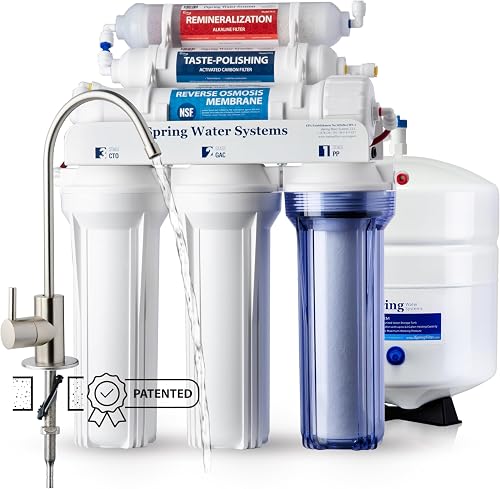
iSpring RCC7AK-BN NSF Certified
9.6/10 our score
See it on Amazon -
3

- 4
 Check it
Waterdrop G3P600 Tankless Reverse Osmosis Water Filter
Best tankless high-output pick - 5
 Check it
DREO Reverse Osmosis Water Filter Countertop
Best countertop with two pitchers - 6
 Check it
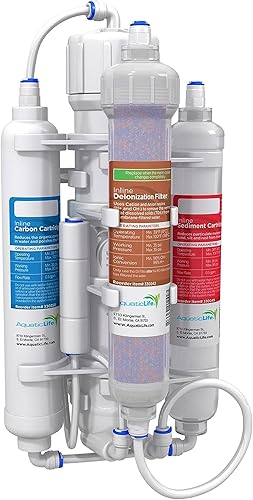
Aquatic Life RO Buddie 4-Stage Aquarium Water
Best for aquariums and spot-free rinsing - 7
 Check it
DREO Reverse Osmosis Water Filter System Countertop
Best compact countertop for 1 to 2 people - 8
 Best for extra filter set valueCheck it
- 9
 Best for higher 90 GPD outputCheck it
The best reverse osmosis systems for home, compared by type
Under-sink tank systems dominate this list because they fit most kitchens and need no power.
Countertop and tankless models win when installation or storage space is your main limit.
Our score weighs specs, features and buyer feedback against what you are shopping for.
Higher scores reflect stronger fit for everyday home drinking water, not a lab ranking.
iSpring RCC7-BN NSF Certified: Best for most kitchens
- 75 GPD 5-stage under-sink system
- NSF/ANSI 58 certified
- Brushed nickel faucet
- No power needed
A proven 5-stage under-sink system with a transparent first housing for easy filter checks and a top-mounted faucet for simpler installation.
Pros
- NSF/ANSI 58 certified
- Transparent first-stage housing
- No power needed
Cons
- Takes under-sink tank space
- 75 GPD is slower than tankless high-output models
The iSpring RCC7-BN suits most households that want a dependable under-sink system without extra complexity.
Its 75 GPD output and 5-stage layout cover sediment, carbon and RO membrane treatment in one unit.
You get a brushed nickel faucet with a patented top-mounted design for easier installation from above.
That top mounting matters in daily use because you tighten and align parts from the counter instead of reaching deep under the sink.
The transparent first-stage housing lets you see sediment buildup before it becomes a problem.
It needs no power source, which helps in kitchens where outlets under the sink are limited.
The system fits under most kitchen sinks at 23.62 by 15.75 by 11.81 inches.
Check cabinet width and height first, since the tank also needs room beside the housings.
For care, plan to inspect that clear housing regularly and shut off the feed water before opening it.
Trade-off matters here.
A storage tank gives steady flow but takes cabinet room.
If tank space is tight, a tankless or countertop pick below may fit better.
iSpring RCC7AK-BN NSF Certified: Best for alkaline remineralization
- 75 GPD 6-stage alkaline system
- pH+ remineralization stage
- NSF/ANSI 58 certified
- Top-mounted faucet
Adds a natural mineral AK stage after reverse osmosis for balanced pH and essential minerals, on the same 75 GPD platform.
Pros
- Alkaline mineral stage
- NSF/ANSI 58 certified for full system
- Transparent first housing
Cons
- Takes under-sink tank space
- Taste preference for remineralized water varies
The iSpring RCC7AK-BN suits buyers who want RO filtration plus remineralization in one system.
Its 6-stage design adds a natural mineral AK stage for balanced pH after the membrane.
It shares the 75 GPD platform with the RCC7-BN, including a top-mounted faucet for installation from above the counter.
The transparent first housing also helps you time filter changes.
That visual cue is useful because sediment load varies by home and a calendar alone can miss early clogging.
iSpring says it reduces TDS by 93 to 98 percent and lists reductions for many contaminants including PFAS, chlorine, lead and fluoride.
The full system carries NSF/ANSI 58 certification.
It runs without electricity, so the same water pressure that feeds your sink drives production.
For setup, allow room for the extra stage and tank, and confirm your faucet hole matches the included faucet.
choose this if you prefer mineral-added taste.
Choose the RCC7-BN if you want a simpler 5-stage system without the alkaline stage.
APEC Water ROES-50: Best for simple 50 GPD setup
- 50 GPD 5-stage under-sink system
- Brushed nickel faucet
- Water tank included
- Quick connection fittings
A straightforward 5-stage system with a tank, faucet and installation kit, built for DIY setup with colored tubing.
Pros
- Includes tank and faucet
- Colored tubing helps setup
- Compact under-sink footprint
Cons
- 50 GPD output is modest for large homes
- Tank uses cabinet space
The APEC Water ROES-50 suits a first-time RO buyer who wants a complete kit with clear setup cues.
Its 50 GPD 5-stage system includes a tank, brushed nickel faucet and installation kit.
Colored tubing and quick connection fittings help you route lines correctly.
That color coding reduces mistakes during setup, especially for drain, feed and purified lines that look similar at first.
APEC says filters are replaced every 6 to 24 months based on incoming water quality.
The wide range reflects real differences in sediment, chlorine and usage.
The unit measures 15.5 by 5.25 by 17 inches, so it fits many cabinets where taller systems do not.
It operates on water pressure without a pump.
That keeps operation simple, but low incoming pressure can slow tank refilling.
The trade-off is output.
At 50 GPD it suits smaller households well, but busy homes may prefer 75 or 90 GPD models for faster tank refill.
For care, keep the manual handy for filter order and check connections after the first week of use.
Waterdrop G3P600 Tankless Reverse Osmosis Water Filter: Best tankless high-output pick
- 600 GPD tankless system
- 8-stage filtration
- Smart display faucet with TDS monitor
- 2:1 pure to drain ratio
A tankless system that fills an 8 oz cup in 8 seconds, with a smart faucet showing TDS and filter life.
Pros
- Fast on-demand flow
- No storage tank
- TDS and filter life display
Cons
- Requires under-sink electricity
- Needs a 1-inch faucet hole and drain connection
The Waterdrop G3P600 suits households that want tankless speed and a modern faucet display.
Its 600 GPD capacity fills an 8 oz cup in 8 seconds, according to Waterdrop.
A smart display faucet shows TDS and filter life, so you can see water quality and maintenance needs in real time.
That display helps in daily use because you do not need a separate meter to spot rising TDS.
The 8-stage filtration covers TDS, chromium, PFAS, fluoride, arsenic and more.
The tankless design saves about 70 percent of under-sink space compared with a tank system.
Filters change in seconds by rotating the used filter out and a new one in.
You do not need to move the whole unit or use tools for that step.
Trade-offs are clear.
It requires under-sink electricity and two drilled holes, one for the faucet and one for the drain pipe.
Measure your cabinet before ordering.
Also confirm outlet access and drain placement, since a tankless system has less flexibility once installed.
DREO Reverse Osmosis Water Filter Countertop: Best countertop with two pitchers
- Countertop RO system
- 3:1 pure to drain ratio
- TDS and filter life monitoring
- 2 autofill pitchers
An install-free countertop unit with two autofill pitchers, built-in TDS metering and self-cleaning function.
Pros
- No installation needed
- Two autofill pitchers
- Built-in TDS meter
Cons
- Countertop footprint required
- 5 liter capacity suits small households best
The DREO Countertop RO system suits renters or anyone who cannot install under the sink.
Its install-free countertop design includes two autofill pitchers for easy serving.
It uses 7-in-1 RO filtration with a 3:1 pure to drain ratio to reduce waste water.
A built-in TDS meter and filter life indicator help you monitor performance.
Self-cleaning auto-flush helps keep internal tubes clean between uses.
That matters if the unit sits for a day or two, since standing water can affect taste.
The 5 liter capacity and two pitchers suit small households and offices well.
You can place one pitcher in the fridge while the other fills at the counter.
Trade-off is footprint and capacity.
It needs counter space at 15.7 by 6.7 by 13.4 inches, and 5 liters is less than a tank system.
For larger families, under-sink output wins.
For care, rinse pitchers regularly and follow the filter reminder instead of waiting for taste changes.
Aquatic Life RO Buddie 4-Stage Aquarium Water: Best for aquariums and spot-free rinsing
- 50 GPD 4-stage RO/DI system
- Color-changing DI resin
- Sediment and carbon block filters
- For fish tanks and fountains
A 4-stage RO/DI unit made for aquariums, with a color-changing resin that shows when it needs replacing. It is not for drinking water.
Pros
- RO/DI for near-zero TDS rinse water
- Color-changing DI resin
- Compact 3.9 lb unit
Cons
- Not for drinking water
- Carbon block will not remove chloramines
The Aquatic Life RO Buddie suits aquarium owners, not drinking water buyers.
Its 4-stage RO/DI design removes debris, chlorine and most dissolved solids for fish tanks and fountains.
Sediment catches dirt, carbon block reduces chlorine and odors, and the RO membrane removes most remaining TDS.
A final deionizing resin polishes water to near zero TDS.
The DI resin changes color from blue to tan when spent, which makes replacement timing clear.
Sediment and carbon filters typically last 3 to 6 months, while membranes last 1 to 2 years.
That schedule depends on tap water quality and how much water you make for water changes.
This unit fits at 14 by 4 by 7.5 inches and weighs 3.9 pounds, so storage is simple.
Note that the carbon block will not remove chloramines, which matters for some municipal supplies.
Trade-off is purpose.
This unit is not for drinking water.
If you need drinking water, choose one of the under-sink or countertop RO systems above instead.
DREO Reverse Osmosis Water Filter System Countertop: Best compact countertop for 1 to 2 people
- 3L countertop RO system
- 0.0001 micron RO membrane
- Real-time TDS monitoring
- 3:1 pure to drain ratio
A slim 3L countertop purifier with a 1.1L autofill pitcher, real-time TDS checks and twist-in filter replacement.
Pros
- Slim countertop footprint
- Real-time TDS display
- Filter lasts 265 gallons
Cons
- 3L tank is small for larger households
- Countertop space needed
The DREO 112 countertop system suits 1 to 2 people who want a slim, install-free purifier.
Its 3L tank plus 1.1L pitcher fits daily drinking and cooking needs without taking much counter space.
It uses a 0.0001 micron RO membrane and shows raw and pure water TDS in real time.
A filter life monitor alerts you when service is due, and the filter lasts 265 gallons.
That gallon rating helps you plan costs and timing without guessing from taste alone.
The slim footprint measures 14.5 by 6.7 by 13.4 inches, so it fits kitchens, living rooms or offices.
Auto-fill sensing and self-cleaning help with hands-free refills.
The pitcher design also means you can carry filtered water to a desk or bedroom.
Trade-off is capacity.
At 3 liters it is ideal for small households, but a 5L DREO or an under-sink system suits larger families better.
For care, keep the tank topped with fresh water and clean the pitcher often.
Express Water RO5DX: Best for extra filter set value
- 50 GPD 5-stage under-sink system
- Extra filter set included
- Leak detector included
- No electricity required
A 5-stage under-sink system that includes an extra filter set and a leak detector, with fast flow from a deluxe faucet.
Pros
- Extra filter set included
- Leak detector included
- No power needed
Cons
- 4 gallon tank capacity
- Discharges 1 to 3 gallons per gallon produced
The Express Water RO5DX suits buyers who want a complete under-sink kit with spare filters included.
Its 50 GPD 5-stage system includes an extra filter set and a leak detector.
It works without electricity and uses quick connect tubing for DIY installation.
The deluxe faucet delivers 0.8 gpm, which helps with filling pots and bottles.
Express Water says it reduces up to 99.99 percent of lead, chlorine, fluoride, PFAS and other impurities.
The system includes a 4 gallon storage tank with 3.2 gallons of water capacity.
That usable capacity is the number to compare for daily drinking, cooking and ice.
Trade-off includes waste water.
It discharges 1 to 3 gallons for each gallon produced, depending on pressure and water quality.
Tankless models may use water more efficiently.
For setup, the leak detector is a useful first check, but you should also inspect connections after installation and after each filter change.
It can mount in a cabinet or freestanding, which gives flexibility for odd sink layouts.
APEC Water RO-90: Best for higher 90 GPD output
- 90 GPD 5-stage under-sink system
- Super capacity filters
- Lead-free chrome faucet
- JG Quick Connect fittings
A higher-output 90 GPD system with large super capacity filters designed to last twice as long as smaller filters.
Pros
- 90 GPD higher output
- Large capacity filters
- JG Quick Connect fittings
Cons
- Larger tank and system footprint
- Manual water pressure operation
The APEC Water RO-90 suits households that want higher output from a tank system.
Its 90 GPD capacity refills a storage tank faster than 50 GPD models.
Large super capacity filters are designed to deliver twice the impurity-removing capacity of smaller all-in-one filters.
That can mean fewer filter change-outs over time.
It includes a lead-free chrome faucet, JG food grade tubing and JG Quick Connect fittings for secure leak sealing.
Those fittings simplify setup because they seal without extra clips.
The system operates on water pressure at 40 to 85 psi.
Staying inside that range helps protect the membrane and keep flow consistent.
Trade-off is size and flow.
At 16 by 5.25 by 17.5 inches plus a tank, it needs cabinet planning.
If you want on-demand speed, a tankless system removes the wait.
For care, measure both the housing unit and the tank separately before you buy, since tanks often take the most space.
Side-by-side: capacity, stages and installation
The table below compares capacity, stages and installation type at a glance.
Use it to narrow by footprint and flow needs before reading the buying advice.
Start with installation type, because under-sink, tankless and countertop models fit very different kitchens.
Then check capacity in gallons per day against your daily drinking and cooking use.
A higher GPD rating refills a tank faster or supports faster on-demand flow.
Stage count comes next, but look at what each stage does rather than the total alone.
Five stages for drinking water, six with remineralization and four for aquarium RO/DI serve different goals.
Footprint matters just as much as output, so measure your cabinet and counter before you decide.
Power needs also split the list, since some models need no electricity and others require an outlet under the sink.
Use the comparison to shortlist two or three models, then read the detailed write-ups for trade-offs and care.
| Product | Best for | Capacity | Stages | Installation | Our score |
|---|---|---|---|---|---|
| iSpring RCC7-BN NSF Certified | most kitchens | 75 gallons | 5-stage | Under Sink | 9.7 |
| iSpring RCC7AK-BN NSF Certified | alkaline remineralization | 75 gallons | 6-stage | Under Sink | 9.6 |
| APEC Water ROES-50 | simple 50 GPD setup | 50 gallons | 5-stage | Under Sink | 9.5 |
| Waterdrop G3P600 Tankless Reverse Osmosis Water Filter | tankless high-output pick | 600 gallons | 8-stage | Under Sink | 9.3 |
| DREO Reverse Osmosis Water Filter Countertop | countertop with two pitchers | 5 liters | 7-in-1 RO filtration | Countertop | 9.1 |
| Aquatic Life RO Buddie 4-Stage Aquarium Water | aquariums and spot-free rinsing | 50 GPD | 4-stage RO/DI | Countertop-style unit | 8.9 |
| DREO Reverse Osmosis Water Filter System Countertop | compact countertop for 1 to 2 people | 3 liters | 7-in-1 RO filtration | Countertop | 8.7 |
| Express Water RO5DX | extra filter set value | 4 gallons | 5-stage | Under Sink | 8.4 |
| APEC Water RO-90 | higher 90 GPD output | 90 gallons per day | 5-stage | Under Sink | 8.2 |
How we compared these reverse osmosis systems
We compared specs, features and buyer feedback against what home shoppers need most.
That means capacity, stages, certification, footprint, power needs and included parts.
We checked each model's stated output in gallons per day, stage count, tank versus tankless design and installation type.
We also noted faucet type, TDS monitoring and filter change cues where provided.
Those cues matter in daily use because they affect how you know when to service the system.
We did not test these systems.
Claims about contaminant reduction, filter life and flow come from each brand's stated specs and certifications.
Scores reflect fit for everyday drinking water at home.
A model can score well for spec strength but lower for a poor fit with renters, small cabinets or low pressure homes.
The aquarium RO/DI unit scores lower for drinking use because it is built for a different job.
We weighted practical factors like included tank, faucet, tubing and spare filters, since missing parts add cost and delay.
We also considered waste water and storage space, because those affect long-term satisfaction more than a long feature list.
What size reverse osmosis system do you need for home use?
Most homes do well with 50 to 75 GPD for drinking and cooking.
That output refills a tank overnight for daily use by a small to medium household.
50 GPD systems for smaller households
A 50 GPD system like the APEC ROES-50 or Express Water RO5DX suits 1 to 3 people.
It produces enough for drinking, cooking and beverages without oversizing the cabinet.
75 to 90 GPD systems for busier kitchens
A 75 GPD iSpring system or 90 GPD APEC RO-90 suits families that fill bottles, pitchers and pots through the day.
Higher output helps when several people use the faucet in succession.
600 GPD tankless systems for on-demand flow
The Waterdrop G3P600 at 600 GPD suits buyers who want water without waiting for a tank.
Its fast flow helps with cooking and filling large containers quickly.
Tank vs tankless vs countertop: which design fits your kitchen?
Tank systems give steady flow, tankless systems save space, and countertop systems avoid installation.
Choose by your cabinet, outlet and renter status.
Under-sink tank systems
A tank stores purified water so the faucet flows at full pressure.
The trade-off is cabinet space for the tank, housing and filters, plus drain water during production.
Tankless under-sink systems
A tankless system purifies on demand and frees tank space.
It needs electricity under the sink and a drain connection, and flow rate depends on the pump and membrane.
Countertop systems
A countertop system like the DREO models needs no drilling or plumbing.
It sits on the counter and uses pitchers or a dispenser, which suits renters and small kitchens.
How many stages should a home reverse osmosis system have?
Five stages is the standard for home drinking water, with six for remineralization and four for aquarium RO/DI.
More stages help only when each stage has a clear job.
5-stage drinking water systems
Five stages typically cover sediment, carbon, carbon block, RO membrane and a final polish filter.
That layout protects the membrane and improves taste before the faucet.
6-stage alkaline systems
A sixth stage can add minerals and raise pH after RO.
The iSpring RCC7AK uses a natural mineral stage for buyers who prefer that taste profile.
4-stage aquarium RO/DI systems
Four stages for aquariums end with deionizing resin for near-zero TDS.
That final polish is for fish and spot-free rinsing, not for drinking water taste.
Can a home RO system connect to a refrigerator or ice maker?
Many under-sink systems can feed a fridge with the right adapter and kit.
Confirm fitting sizes, pressure and fridge requirements before you connect anything.
If your fridge has ice and water through the door, a RO feed can improve taste for ice cubes and drinking water.
Some brands sell an ice maker kit separately for that connection.
For fridge-specific needs, see our guide to the best reverse osmosis system for refrigerator.
That guide covers feed lines, pressure and install checks for refrigerator use.
Also check your fridge's own filter routine in How to Use and Replace Your Fridge’s Air Filter System.
An RO feed and a fridge air filter solve different problems, so both may need attention.
Whole-house vs point-of-use: do you need whole-house RO?
Most homes need point-of-use RO at the kitchen, not whole-house RO.
Whole-house treatment shines only when water quality issues affect every tap or fixture.
A reverse osmosis system whole house setup treats water for the entire home, which costs more and wastes more water.
It suits homes with specific whole-home water concerns.
For drinking and cooking, a kitchen RO system gives you purified water where you need it most.
Bathing, laundry and toilet water rarely need RO-level purity.
If space is tight and you want a smaller unit, compare small reverse osmosis system reviews.
Those picks focus on compact footprints for apartments and small sinks.
How do you size and maintain a reverse osmosis system at home?
Size by daily drinking and cooking use, then maintain by filter schedule and waste checks.
A simple calendar helps you stay on track.
Sizing your system
Estimate daily use for drinking, cooking, coffee and ice.
Add a buffer for guests and bottle filling, then pick a GPD rating that refills your tank or meets your flow needs.
Filter changes and TDS checks
Change sediment and carbon filters on the brand schedule, often every 6 to 12 months.
Use a TDS meter to spot rising levels that can signal a filter or membrane change.
Setup, care and leak checks
Shut off water before servicing housings and check O-rings for wear.
For a simpler point-of-use option without plumbing, an inline water filter may suit a different need.
If you use a smart fridge with an RO feed, confirm compatibility in Can You Use a Smart Refrigerator with a Smart Home Hub?.
Hub and fridge controls do not affect RO filtration, but they can affect ice and water demand timing.
Verdict: which home reverse osmosis system should you buy?
Buy the iSpring RCC7-BN for most kitchens, the Waterdrop G3P600 for tankless speed, and a DREO countertop model for no-install setup.
That rule covers most home shoppers without overthinking stages.
Pick the iSpring RCC7AK if you want alkaline remineralization.
Pick the APEC RO-90 if you want higher tank output.
Pick the Aquatic Life RO Buddie only for aquariums and spot-free rinsing.
For your next step, measure your cabinet, confirm power and faucet holes, and match GPD to your daily use.
Then choose the best reverse osmosis system for home that fits your space and setup style.
If you want the simplest path, start with the iSpring RCC7-BN.
Its 75 GPD output suits most families, the 5-stage design is straightforward, and it needs no power.
The transparent first housing makes maintenance easier to judge, and NSF/ANSI 58 certification gives clear assurance for the full system.
The main cost is space, because the tank and housings need cabinet room.
If your cabinet is already full, the Waterdrop G3P600 is the better fit.
It makes water on demand at 600 GPD and shows TDS and filter life on the faucet.
You trade convenience for electricity and drilling, so confirm an outlet, a 1-inch faucet hole and drain access before ordering.
If you rent or cannot drill, a DREO countertop model avoids plumbing entirely.
The 5 liter version suits small households that want two pitchers, while the 3 liter version suits one to two people in a slim footprint.
Both need counter space and regular pitcher cleaning, and both produce less water than an under-sink tank system.
For smaller under-sink budgets, the APEC ROES-50 and Express Water RO5DX cover the basics at 50 GPD.
Check incoming pressure, tank size and waste water before you commit to either one.
Finally, plan maintenance from day one.
Mark filter change dates, check TDS if your system shows it, and inspect fittings after install.
That routine protects taste, flow and the membrane, and it helps any of these systems serve you well for years.
Our top 3 picks at a glance
-
1
-
2
Best for alkaline remineralization
iSpring RCC7AK-BN NSF Certified
9.6/10 our score
See it on Amazon -
3
Frequently asked questions
What is the best reverse osmosis system for home use?
The best reverse osmosis system for home for most kitchens is a 5-stage under-sink model with NSF/ANSI 58 certification, like the iSpring RCC7-BN at 75 GPD. Choose tankless for speed or countertop for no installation, based on your sink, power and space.
Do I need a tank or tankless RO system?
A tank system stores purified water for steady flow but uses cabinet space. A tankless system makes water on demand and saves space but needs electricity and produces water at a set flow rate.
How often should RO filters be replaced?
Sediment and carbon filters are commonly changed on a schedule set by the brand, often every 6 to 12 months. RO membranes typically last longer, and DI resin in aquarium units changes color when spent.
Can an RO system feed a refrigerator ice maker?
Many under-sink systems can be adapted for fridge ice and water lines with the right kit. Confirm fitting sizes and water pressure before connecting, and check the fridge manual for its feed requirements.