Can You Plug a Smart Refrigerator into a Regular Outlet?
On this page (7 sections)
Yes, you can typically plug a smart refrigerator into a regular household outlet. Most smart refrigerators are designed to run on standard 110-120 volt power. They don’t require special wiring like some older, high-power appliances might. Just ensure the outlet is properly grounded for safety.
When choosing an outlet, it’s wise to avoid sharing it with other major appliances. This helps prevent overloading the circuit. Your smart fridge uses power for its cooling system and its advanced features, so a dedicated or lightly used outlet is best. Think of it as giving your smart appliance its own personal space to shine.
- Smart refrigerators generally use standard outlets.
- They run on 110-120 volt power.
- Avoid sharing the outlet with heavy-duty appliances.
- A grounded outlet is important for safety.
Let’s walk through what you need to know to ensure your smart refrigerator is plugged in correctly and safely.
Using a Standard Outlet for Your Smart Refrigerator
You’re probably wondering if your shiny new smart refrigerator can simply plug into the same outlet your old one used. The good news is, for the vast majority of smart refrigerators, the answer is a resounding yes! These appliances are designed with modern homes in mind. They typically draw power from a standard 110-120 volt outlet. You won’t need an electrician to run special wiring for your smart fridge, which is a relief for many homeowners.
Think of your smart refrigerator as an upgraded version of its traditional counterpart. While it has extra brains and features, its fundamental power requirement remains the same. It needs a consistent flow of electricity to keep your food perfectly chilled and to power its smart capabilities, like touchscreens or Wi-Fi connectivity. So, no need to panic about complex electrical setups!
Understanding Your Smart Fridge’s Power Needs
Your smart refrigerator has two main jobs: keeping food cold and running its smart features. The cooling system, which involves the compressor and fans, is the biggest power consumer. This is similar to any refrigerator, smart or not. The “smart” features, like a built-in display, Wi-Fi connection, or even internal cameras, draw much less power. They’re more like running a tablet or a small computer.
When you consider the combined power draw, it’s still well within the range of a typical household outlet. However, it’s wise to understand that while it can plug into a regular outlet, not all regular outlets are created equal in terms of what else is plugged into them.
The Importance of a Grounded Outlet
Safety is always the top priority, right? This is where the grounded outlet comes into play. Most modern homes have grounded outlets, which have three prongs: two flat ones for the power supply and a round one for grounding. This third prong is a safety feature that provides an escape route for excess electricity in case of a fault.
Why is this so important for your smart fridge? In the unlikely event of an electrical issue, the grounding wire can help prevent a shock or damage to the appliance. Electrical safety guidelines from organizations like the Occupational Safety and Health Administration (OSHA) strongly recommend using grounded outlets for all major appliances. You can usually tell if an outlet is grounded by looking at the plug on your refrigerator – if it has three prongs, you’ll need a three-slot outlet.
Checking Your Outlet Type
Before you plug in your new smart refrigerator, take a moment to look at the outlet. Do you see two holes or three? If it’s three, you’re likely good to go. If you only see two, it’s an older, ungrounded outlet. In this case, it’s best to have a qualified electrician upgrade the outlet to a grounded one. This is a relatively simple and inexpensive fix that greatly enhances safety.
Many experts also advise against using adapters that defeat the grounding function. These “cheater plugs” might seem convenient, but they eliminate a vital safety feature. Your smart refrigerator, with all its advanced technology, deserves the best protection.
Avoiding Circuit Overload: The Golden Rule
This is where the advice about “regular outlets” needs a bit of clarification. While a smart refrigerator can plug into a standard outlet, it’s not a good idea to overload the circuit it’s connected to. Think of your home’s electrical circuits like traffic lanes. Each lane has a limit for how many cars (appliances) it can handle safely.
Your refrigerator, even a smart one, uses a fair amount of electricity, especially when its compressor kicks in. If you plug it into an outlet that’s already powering other high-demand appliances, you risk tripping the circuit breaker. This will cause your refrigerator to lose power, potentially spoiling your food.
What Appliances Draw the Most Power?
We’ve already touched on this, but it’s worth reiterating. Certain appliances are notorious power hogs. These usually include:
- Microwave ovens
- Toasters and toaster ovens
- Hair dryers
- Space heaters
- Washing machines and dryers
- Dishwashers
- Conventional ovens
If the outlet for your smart refrigerator is on the same circuit as any of these, you’re asking for trouble. It’s like trying to run a marathon and carrying a backpack full of bricks simultaneously. It’s just too much strain.
Best Practices for Outlet Selection
So, what’s the ideal scenario for plugging in your smart refrigerator? The best practice is to plug it into an outlet that is either dedicated solely to the refrigerator or is on a circuit with very few other items, and certainly no other high-draw appliances. Many kitchen designs will include outlets specifically for refrigerators. These are often placed behind the unit and are meant for its exclusive use.
If you’re unsure about which outlets are on which circuits, you can check your home’s electrical panel. Look for the breaker switches labeled “Kitchen,” “Living Room,” or specific appliance circuits. When in doubt, it’s always best to consult a qualified electrician. They can help you identify suitable outlets and even recommend adding a new, dedicated circuit if necessary.
We found that many homeowners often overlook this aspect, leading to unnecessary interruptions. A little bit of planning upfront can save you a lot of headaches down the line.
Considering Extension Cords and Power Strips
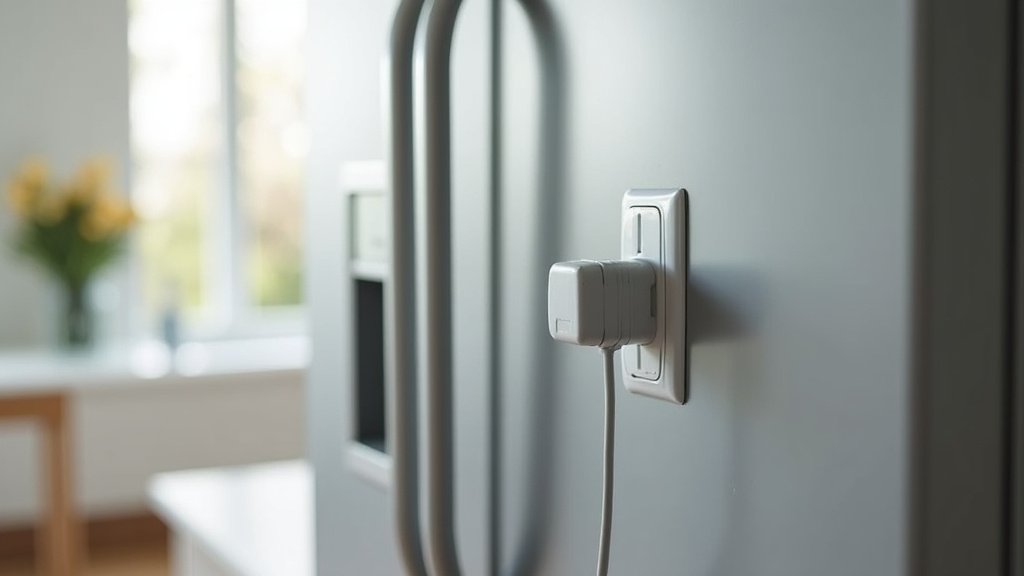
What if the perfect outlet is just a little too far away? It’s tempting to reach for an extension cord or power strip. However, when it comes to refrigerators, especially smart ones, these are generally not recommended.
Refrigerators have motors that draw a significant amount of power. Extension cords and power strips can sometimes restrict this flow of electricity. This can lead to the motor working harder, overheating, and potentially causing damage. The U.S. Consumer Product Safety Commission (CPSC) advises against using extension cords for major appliances due to the fire risk.
The Risks of Using Extension Cords
Let’s break down why extension cords are a bad idea for your fridge:
- Voltage Drop: Long or thin extension cords can cause a drop in voltage. This means your refrigerator might not get the consistent power it needs to operate efficiently.
- Overheating: The cord itself can overheat, posing a fire hazard, especially if it’s not rated for the appliance’s power draw.
- Damage to the Cord: Cords can be easily damaged, frayed, or pinched, leading to electrical shorts.
- Not Designed for Continuous Use: Most standard extension cords are not designed for the continuous, heavy load a refrigerator represents.
A smart refrigerator is an investment, and protecting it from potential electrical issues should be a priority. Relying on a direct connection to a properly rated and grounded outlet is the safest approach.
When a Power Strip Might (Barely) Be Okay
There are very few scenarios where a power strip might be considered, and even then, with extreme caution. If you absolutely must use one, it needs to be a heavy-duty power strip specifically designed for appliances, with surge protection. It should also have a short, thick cord to minimize voltage drop.
However, we strongly advise against this. The manufacturer’s warranty for your smart refrigerator might also be voided if damage occurs due to improper electrical connections, including the use of extension cords or unsuitable power strips. Always check your appliance’s manual for specific recommendations regarding power sources.
A Quick Checklist for Safe Installation
To help you ensure your smart refrigerator is plugged in safely and correctly, here’s a quick checklist:
- Verify the outlet is grounded (three-prong plug requires a three-slot outlet).
- Check the outlet’s amperage to ensure it can handle the refrigerator’s needs.
- Avoid sharing the outlet with other high-draw kitchen appliances like microwaves or toasters.
- Ensure the outlet is easily accessible but also out of the way of normal foot traffic.
- Never use an extension cord or a standard power strip for your refrigerator.
- Consult your refrigerator’s manual for any specific electrical requirements.
Conclusion
You’ve learned that plugging your smart refrigerator into a regular household outlet is generally safe and straightforward. The key is ensuring that outlet is properly grounded and not overloaded with other high-demand appliances. We’ve seen that your smart fridge, despite its advanced tech, uses standard voltage. The real concern is circuit sharing. By following best practices, like dedicating an outlet or using one on a lightly loaded circuit, you protect your appliance and your food.
Take a moment this week to check the outlet your smart fridge is plugged into. Ensure it meets these simple safety guidelines for peace of mind.
Frequently Asked Questions
Do I need a special outlet for a smart refrigerator?
No, you typically do not need a special outlet. Most smart refrigerators are designed to run on standard 110-120 volt power and can be plugged into a regular, properly grounded household outlet. Just ensure it’s a three-prong outlet for safety.
Can I plug my smart fridge into the same outlet as my microwave?
It’s strongly advised against plugging your smart refrigerator into the same outlet as a high-draw appliance like a microwave. Doing so can overload the circuit, causing the breaker to trip and your refrigerator to lose power, potentially spoiling food.
What if my refrigerator outlet is ungrounded?
If your refrigerator outlet only has two slots and is ungrounded, it’s best to have a qualified electrician upgrade it to a grounded, three-slot outlet. This is an important safety measure for major appliances like refrigerators.
Is it safe to use an extension cord for my smart refrigerator?
No, it is generally not safe or recommended to use an extension cord for your smart refrigerator. Extension cords can restrict power flow, lead to voltage drops, and pose a fire hazard. Always plug your refrigerator directly into a wall outlet.
How can I tell if my outlet can handle my smart refrigerator?
While most standard outlets can handle a smart refrigerator, you should ensure the outlet is properly grounded and not shared with other appliances that draw a lot of power. Check your home’s electrical panel to see what else is on that circuit. If you’re unsure, consult an electrician.