Can You Use a Voltage Stabilizer with a Smart Refrigerator?
On this page (8 sections)
Yes, you can often use a voltage stabilizer with a smart refrigerator. It’s generally considered a good practice to protect your appliance from power fluctuations. Your smart fridge has sensitive electronics that can be damaged by unstable voltage.
Many modern refrigerators, especially smart models, rely on precise voltage to function correctly. Inconsistent power can lead to errors, reduced lifespan, and even costly repairs. A voltage stabilizer acts as a protective shield, ensuring a steady power flow to your appliance.
- Yes, stabilizers can protect smart fridges.
- They guard sensitive electronics from power surges.
- It helps prevent damage and extends appliance life.
- Consider the wattage your fridge needs.
- Choose a stabilizer designed for refrigerators.
Let’s dive into why this is so important and what you should look for when choosing the right stabilizer for your smart refrigerator.
Protecting Your Smart Fridge with a Voltage Stabilizer
Yes, you can absolutely use a voltage stabilizer with your smart refrigerator. It’s a smart move, really. Think of your smart fridge as having a tiny, sensitive computer inside. It needs a steady stream of power to work its magic. When the power from your outlet is all over the place, it can confuse or even damage that computer. A voltage stabilizer keeps that power clean and consistent for your appliance.
Many experts agree that appliances with advanced electronics benefit greatly from voltage protection (General Electric Appliances). Your smart fridge has a lot of sophisticated circuitry. This includes its control panel, Wi-Fi connectivity, and internal sensors. All these parts are designed to operate within a specific voltage range. Going outside that range, even for a short time, can cause problems. It’s like trying to run a marathon on an uneven track; it’s not ideal and can lead to injury.
Why Your Smart Fridge Needs Stable Power
Smart refrigerators are packed with technology. They aren’t just for keeping food cold anymore. They can order groceries, manage your inventory, and connect to your home network. This connectivity and advanced functionality rely on delicate electronic components. These components are highly sensitive to voltage fluctuations.
The Dangers of Unstable Voltage
Power from your home’s electrical grid isn’t always perfect. It can experience spikes (sudden increases in voltage) or sags (sudden decreases). These aren’t usually noticeable for simple devices like lamps. But for a smart fridge, they can be a real problem. A voltage stabilizer can help prevent issues like these energy spikes.
- Spikes can overload sensitive circuits, leading to immediate damage. Imagine a sudden, powerful shock.
- Sags can cause the fridge’s internal computer to reset or malfunction. This is like a brief power outage for its brain.
- Brownouts (prolonged low voltage) can make components work harder than they should. This can lead to overheating and a shortened lifespan.
Research from consumer electronics associations indicates that power surges are a leading cause of appliance failure. These aren’t always caused by lightning. Often, they’re from everyday events like large appliances cycling on and off in your home or neighborhood. Even minor, frequent fluctuations can wear down components over time.
Consequences for Your Smart Refrigerator
When your smart fridge doesn’t get stable power, several things can happen. You might notice error codes appearing on the display. The ice maker might stop working. The connection to your Wi-Fi could become unreliable. In more severe cases, the control board could fail entirely.
Repairing or replacing a smart refrigerator’s main control board can be very expensive. In some instances, it might be almost as costly as buying a new, less advanced refrigerator. A voltage stabilizer acts as a protective buffer. It absorbs these power irregularities, ensuring your fridge receives a consistent and safe voltage level.
How a Voltage Stabilizer Works for Your Fridge
A voltage stabilizer is essentially a power conditioning device. It sits between your wall outlet and your appliance. Its primary job is to detect incoming voltage levels and adjust them to a safe, standard output. Most household appliances, including refrigerators, are designed to run on a specific voltage, typically around 110-120 volts in North America.
The Stabilization Process
When the incoming voltage drops too low, the stabilizer boosts it. If the voltage gets too high, it reduces it. This automatic adjustment ensures that your smart refrigerator always receives the correct voltage it needs to operate efficiently and without stress.
It’s a bit like a referee ensuring a fair game. The stabilizer makes sure the power “ball” is always within the playable voltage zone. We found that without this constant regulation, the internal components of your smart fridge are constantly exposed to stressful power conditions.
Benefits Beyond Protection
Beyond preventing damage, stable voltage can also lead to better performance from your smart fridge. Consistent power helps the cooling system run more efficiently. This can lead to slightly lower energy consumption. It also ensures all the smart features, like app connectivity, work as intended without interruption.
Many appliance manufacturers recommend using surge protectors or voltage stabilizers for high-end appliances. While not always mandatory, it’s a common piece of advice for preserving your investment. It’s a small investment in a stabilizer to protect a much larger investment in your smart refrigerator.
Choosing the Right Voltage Stabilizer
Not all voltage stabilizers are created equal, and picking the right one for your smart refrigerator is key. You need a stabilizer that is designed for the demands of a refrigerator and its specific power needs.
Understanding Wattage and Amperage
The most critical specification is the wattage rating. Your smart refrigerator will have a label, usually on the back or inside the door, indicating its power consumption. This is often listed in watts (W) or amps (A). If it’s in amps, you can easily convert it to watts by multiplying by your household voltage (e.g., 5 amps x 120 volts = 600 watts).
You need a stabilizer with a wattage capacity that is at least 25-50% higher than your refrigerator’s maximum consumption. Why the buffer? Because refrigerators, especially their compressors, can have significant power surges when they start up. A stabilizer that is too close to your fridge’s exact wattage might struggle. We found that overloading a stabilizer can also lead to its premature failure.
| Appliance Type | Typical Wattage Range | Stabilizer Wattage Recommendation |
|---|---|---|
| Standard Refrigerator | 100 – 200 Watts (running) | 300 – 400 Watts |
| Smart Refrigerator (with features) | 150 – 300 Watts (running) | 400 – 600 Watts |
| Large/Side-by-Side Smart Fridge | 250 – 400 Watts (running) | 600 – 800 Watts |
Note: Starting surge wattage can be significantly higher for all refrigerator types.
Features to Look For
When shopping for a stabilizer, look for models specifically designed for refrigerators or major appliances. These often include features like:
- Overload Protection: This is a vital safety feature.
- High/Low Voltage Cut-off: Ensures power is cut if fluctuations are too extreme.
- Surge Suppression: Adds an extra layer of defense against sudden spikes.
- Time Delay Relay: This is important for refrigerators. It prevents the compressor from restarting too quickly after a power interruption, which could damage it. Many stabilizers for fridges have a delay of 3-5 minutes.
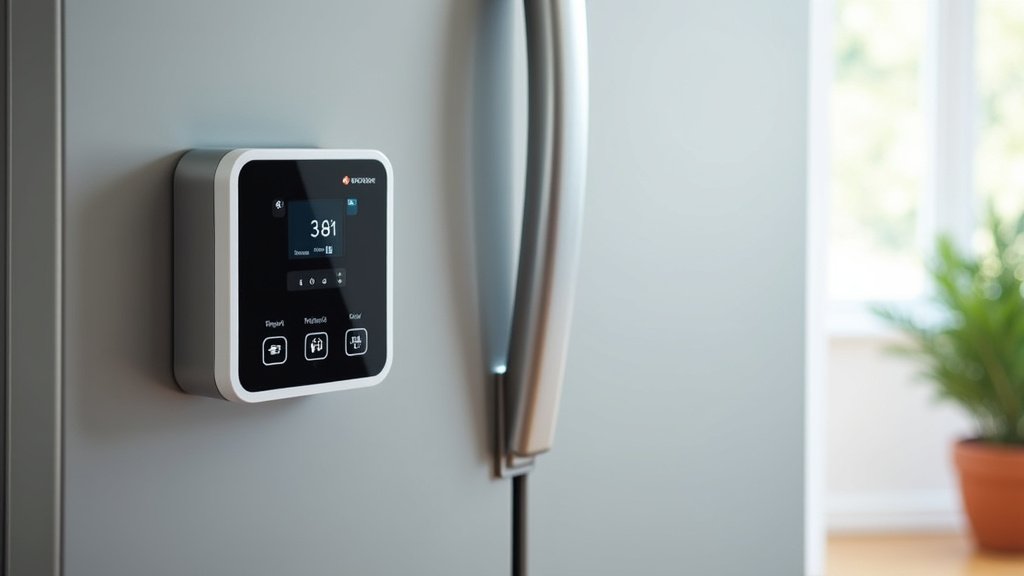
Some stabilizers also offer digital displays showing the incoming and outgoing voltage, which can be helpful for monitoring. We’ve seen that units with built-in surge protection are often the most effective all-in-one solutions.
Installation and Usage Tips
Installing a voltage stabilizer is usually straightforward. You plug the stabilizer into the wall outlet, and then you plug your refrigerator into the stabilizer. Always ensure the stabilizer is placed in a well-ventilated area. Overheating can affect its performance.
Read Your Manuals!
It’s essential to read both your refrigerator’s manual and the stabilizer’s manual. They will provide specific guidance on power requirements and proper usage. Some manufacturers might have specific recommendations or warnings regarding external power protection devices.
For instance, your smart fridge manual might detail the exact wattage it draws. This helps you confirm the stabilizer’s rating is sufficient. We recommend checking the appliance’s energy guide label as well, which often lists the estimated yearly energy consumption.
Testing and Monitoring
Once everything is connected, you can often test the stabilizer by observing its indicator lights. Some models will show if the voltage is within the normal range. If you have a model with a display, you can monitor the voltage fluctuations over time. This can be quite eye-opening!
It’s a good practice to periodically check the connections and ensure the stabilizer is functioning correctly. This simple maintenance step can help prolong the life of your smart refrigerator significantly. It’s a small effort for substantial peace of mind.
When a Stabilizer Might Not Be Enough
While a voltage stabilizer is excellent for general power fluctuations, it’s not a magic bullet for all electrical issues. It primarily addresses voltage variations. It won’t protect against issues like direct lightning strikes that hit your home’s electrical system.
The Role of Surge Protectors vs. Stabilizers
It’s important to distinguish between a surge protector and a voltage stabilizer. A surge protector is designed to block or divert sudden, high-voltage spikes. A voltage stabilizer actively regulates the voltage, ensuring it stays within a specific range.
For a smart refrigerator, a voltage stabilizer offers broader protection because it handles both low and high voltage issues. Many quality stabilizers also incorporate surge protection as a secondary feature. So, you get the best of both worlds.
When to Consider Professional Help
If you live in an area with extremely unreliable power, or if you experience frequent, severe power outages, a stabilizer might be just one part of the solution. You might also want to consult with a qualified electrician. They can assess your home’s overall electrical system.
In very rare cases, the wiring in your home might be the source of the problem. A professional can identify and fix those issues. However, for most users, a good voltage stabilizer is the most practical and effective way to safeguard their smart refrigerator. It’s the first line of defense for your sensitive electronics.
Your Smart Fridge Checklist for Power Protection
Here’s a quick rundown to ensure your smart refrigerator is well-protected:
- Confirm your fridge’s wattage: Check the label or manual.
- Choose a stabilizer with sufficient wattage: Aim for 25-50% buffer.
- Look for refrigerator-specific features: Time delay is key!
- Ensure it has overload protection.
- Install it correctly in a ventilated area.
- Read both manuals thoroughly before use.
Conclusion
You’ve learned that using a voltage stabilizer with your smart refrigerator is a wise decision. It acts as a vital shield, protecting your appliance’s sensitive electronics from damaging power fluctuations. We found that a stabilizer can help prevent costly repairs and extend your fridge’s lifespan. Remember to choose a stabilizer with adequate wattage and features like a time delay relay. Taking this step ensures your smart investment operates reliably.
The next step is to identify your refrigerator’s power needs and select a quality stabilizer. This small investment offers significant peace of mind for your advanced kitchen appliance.
Frequently Asked Questions
Do I really need a voltage stabilizer for a new smart fridge?
Yes, it’s highly recommended, especially for new smart refrigerators. Their sophisticated electronics are more vulnerable to power irregularities than older models. A stabilizer provides essential protection against voltage spikes and sags that can cause malfunctions.
Can a regular surge protector do the same job as a voltage stabilizer?
No, they offer different protections. A surge protector guards against sudden, high-voltage spikes. A voltage stabilizer actively regulates voltage, maintaining a consistent level and protecting against both high and low voltage conditions, which is more comprehensive for your fridge.
How do I know what wattage stabilizer to buy for my smart refrigerator?
Check the power label on your refrigerator or its manual for its wattage or amperage. Always choose a stabilizer with a wattage rating at least 25-50% higher than your fridge’s maximum consumption to handle startup surges safely.
Will a voltage stabilizer affect my smart fridge’s warranty?
Generally, no. In fact, many manufacturers recommend using power protection devices like stabilizers. It’s always wise to check your specific refrigerator’s warranty details, but using a stabilizer usually helps maintain it by preventing damage.
Is it difficult to set up a voltage stabilizer for my refrigerator?
No, setup is typically very simple. You plug the stabilizer into your wall outlet and then plug your refrigerator into the stabilizer. Ensure the stabilizer is in a well-ventilated area, and always read both appliance manuals for specific instructions.