Why Is My Ge Profile Refrigerator Water Dispenser Slow?
On this page (9 sections)
- Troubleshooting Your GE Profile Fridge’s Slow Water Dispenser
- The Clogged Water Filter: The Usual Suspect
- Frozen Water Lines: When Winter Comes Inside
- Kinked or Pinched Water Lines: A Restricted Flow
- Your Home’s Water Pressure: Is It Enough?
- The Dispenser Valve: A Less Common, But Possible, Issue
- Quick Checklist for a Sluggish Dispenser
- Conclusion
- Frequently Asked Questions
Your GE Profile refrigerator water dispenser is slow primarily because of a clogged water filter. This is the most common culprit, as sediment can build up over time. Other likely reasons include a frozen water line or a kinked tube restricting flow.
It’s frustrating when you’re waiting for that cool glass of water. We found that a slow dispenser can also stem from a weak water pressure issue in your home’s supply or a problem with the dispenser valve itself. Don’t worry, most of these are easily fixable!
- Clogged water filter is the top reason.
- Frozen water line or kinked tube can slow flow.
- Check your home’s water pressure.
- The dispenser valve might need attention.
- Filter changes are often the simple solution.
Let’s walk through the common reasons why your GE Profile refrigerator water dispenser might be acting sluggish and how to get that refreshing water flowing quickly again.
Troubleshooting Your GE Profile Fridge’s Slow Water Dispenser
It’s quite annoying when your GE Profile refrigerator’s water dispenser decides to take a nap. You’re thirsty, you push the lever, and… drip, drip, dribble. We understand how frustrating that can be. Let’s get to the bottom of why your water flow is so slow and how to fix it.
The Clogged Water Filter: The Usual Suspect
By far, the most common reason for a slow water dispenser is a clogged water filter. Think of it like a coffee filter. Over time, it catches all sorts of sediment, minerals, and other particles from your water supply. When it gets full, it can’t let water through as easily.
How Often Should You Replace Your GE Profile Water Filter?
Most GE Profile refrigerator manuals recommend changing the water filter every six months. However, this can vary based on your water quality and how much water you use. If you have very hard water or notice a decline in flow, it might be time for a change sooner.
Signs Your Water Filter Needs Replacing
Besides a slow dispenser, other signs point to a filter that’s seen better days. You might notice a change in water taste or odor. Sometimes, the ice production can also slow down. If your refrigerator has a filter indicator light, it will likely be on or flashing.
Replacing the Water Filter: A Simple Fix
Replacing the filter is usually a straightforward process. You’ll typically find the filter located inside the refrigerator, often in the upper right corner, or sometimes in the base grille. Consult your GE Profile refrigerator’s user manual for the exact location and step-by-step instructions.
- Turn off the water supply to the refrigerator.
- Locate the old filter.
- Twist and remove it.
- Insert the new filter, ensuring it’s properly seated.
- Turn the water supply back on.
- Flush several gallons of water through the dispenser to remove air and any loose particles.
Frozen Water Lines: When Winter Comes Inside
Another common culprit, especially in colder climates or if your refrigerator’s temperature settings are too low, is a frozen water line. The small tube carrying water from the supply to your dispenser can freeze up, blocking the flow.
Identifying a Frozen Water Line
If your water dispenser suddenly stops working, and you know your filter is new, a frozen line is a strong possibility. You might also notice your ice maker isn’t producing ice. Sometimes, you can hear sloshing or gurgling sounds in the refrigerator’s wall where the water line runs.
Thawing a Frozen Water Line
You’ll need to gently thaw the frozen line. First, turn off the water supply to the refrigerator to prevent leaks if the ice causes a blockage. Then, try using a hair dryer on a low setting to warm the area where you suspect the ice is located. Alternatively, you can disconnect the water line and submerge the frozen section in warm water. Be patient; it can take some time.
Avoid using a heat gun or an open flame, as this could damage the plastic tubing. Many experts suggest setting your refrigerator’s temperature a few degrees warmer temporarily to help prevent refreezing.
Kinked or Pinched Water Lines: A Restricted Flow
Sometimes, the problem isn’t a clog or ice, but simply a physical obstruction. The water line that connects your refrigerator to the home’s water supply can become kinked or pinched. This is often caused by the refrigerator being pushed too far back against the wall or by the tubing getting twisted during installation or moving the appliance.
Checking for Kinks and Pinches
You’ll need to carefully pull your GE Profile refrigerator away from the wall. Inspect the entire length of the water line for any sharp bends, twists, or areas where it might be compressed. Pay close attention to where the line connects to both the wall and the refrigerator.
Straightening Out the Tubing
If you find a kink, gently try to straighten the tubing. Be careful not to crease or damage the line. If the kink is severe and doesn’t straighten out easily, you might need to replace that section of the water line. Ensure the refrigerator is not pushed too tightly against the wall afterward.
Your Home’s Water Pressure: Is It Enough?
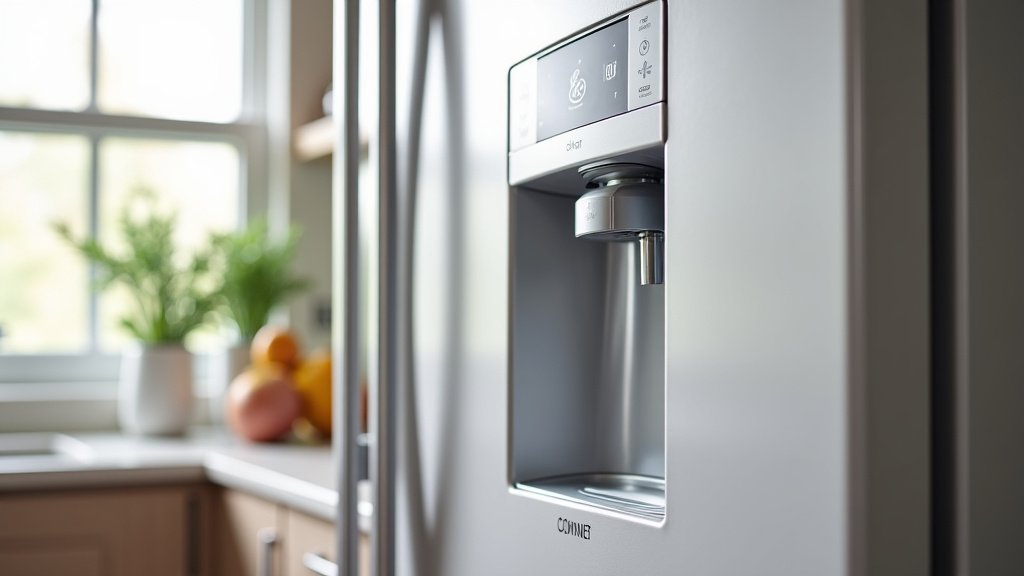
Your GE Profile refrigerator’s water dispenser relies on the water pressure from your home’s supply. If your home’s water pressure is too low, the dispenser will naturally have a slow flow, regardless of the filter or water line condition.
How to Test Your Home’s Water Pressure
You can purchase an inexpensive water pressure gauge at most hardware stores. Simply attach it to an outdoor spigot or a washing machine hookup. The average home water pressure should be between 40 and 60 PSI (pounds per square inch). If your pressure is consistently below 20 PSI, it’s likely too low for optimal dispenser function (Cleveland Clinic).
Addressing Low Home Water Pressure
If you discover your home has low water pressure, you might need to consult a plumber. They can help identify the cause, which could be an issue with your main water line, a faulty pressure-reducing valve, or even problems with the municipal supply. Sometimes, upgrading your home’s plumbing can also help.
The Dispenser Valve: A Less Common, But Possible, Issue
In some cases, the slow water flow could be due to a problem with the dispenser valve assembly itself. This is the mechanism behind the lever you press. While less common than filter or line issues, a faulty valve can restrict water flow.
Symptoms of a Faulty Dispenser Valve
Besides slow dispensing, you might notice leaking from the dispenser area or the lever feeling stiff or unresponsive. If you’ve ruled out all other common causes and the flow is still poor, this component might be the culprit.
What to Do About a Dispenser Valve Problem
Repairing or replacing a dispenser valve assembly often requires some mechanical aptitude. If you’re comfortable with basic appliance repair, you can look up specific instructions for your GE Profile model. However, for many people, this is a job best left to a qualified appliance technician. They have the tools and expertise to diagnose and fix such issues safely.
Quick Checklist for a Sluggish Dispenser
Here’s a quick rundown to help you troubleshoot your GE Profile refrigerator’s slow water dispenser:
- Check and replace the water filter if it’s due or clogged.
- Ensure the water line isn’t frozen; thaw if necessary.
- Inspect the water line for any kinks or pinches.
- Test your home’s water pressure.
- Listen for unusual sounds and check the dispenser lever.
- If unsure, call a professional technician.
Conclusion
Your GE Profile refrigerator’s slow water dispenser can be a real annoyance, but thankfully, most causes are quite simple to fix. We’ve found that the most common culprits are a clogged water filter, a frozen water line, or a kinked tube. Don’t forget to check your home’s water pressure and the dispenser valve as potential issues.
By systematically checking these points, you can likely get your water flowing freely again. The easiest first step is often replacing your water filter. If that doesn’t do the trick, move on to inspecting the lines and other possibilities. If you’re ever unsure or uncomfortable with a repair, don’t hesitate to call a professional appliance technician.
Frequently Asked Questions
How do I know if my GE Profile refrigerator water filter is truly clogged?
The most obvious sign is a noticeable decrease in water flow from your dispenser. You might also experience slower ice production. If your refrigerator has a filter indicator light, it may be on or flashing to signal it’s time for a change.
Can a frozen water line really cause a slow dispenser?
Yes, a frozen water line completely blocks water flow. This usually happens if the refrigerator’s temperature is set too low or if the water line itself is exposed to colder temperatures. You might hear gurgling or sloshing sounds if the line is freezing.
What’s the easiest way to check for a kink in the water line?
You’ll need to gently pull your refrigerator away from the wall. Then, carefully examine the entire length of the water line for any sharp bends, twists, or areas where it looks like it’s being squashed. Ensure the line isn’t caught behind the appliance.
My water pressure at home is low, what can I do about it?
If your home’s water pressure is consistently below 20 PSI, it might be too low for your dispenser to work efficiently. You should contact a plumber. They can assess your home’s plumbing system and suggest solutions like a pressure booster pump or address issues with your main water supply.
Is replacing the dispenser valve something I can do myself?
Replacing the dispenser valve assembly can be complex and may require specific tools. While some DIYers can manage it, it’s often a job best left to a qualified appliance repair technician. They have the expertise to diagnose and safely replace this component if it’s causing your slow flow issue.