How to Freeze Meals in Meal Prep Containers
Freeze meals in freezer-safe containers after cooling them, leaving room for expansion, and sealing the lids securely. Label each container, freeze meals flat when possible, and thaw them safely before reheating.
On this page (7 sections)
- How do you freeze meals in meal prep containers?
- How should you fill containers before freezing?
- How do you prevent freezer burn?
- Are round containers good for freezing meals?
- How do you freeze containers so they stack well?
- How should you thaw and reheat frozen meals?
- Which meal prep container should you choose?
Freeze meals in meal prep containers by using freezer-safe containers, cooled food, extra space, and tightly closed lids. This routine helps meals freeze more evenly and thaw with less mess.
Portion food into amounts you will actually eat. Smaller portions cool faster than one large batch, which protects texture and helps food freeze more evenly.
Let hot food cool before sealing it for the freezer. A tightly closed container holding very hot food can trap steam and slow cooling, so prompt cooling in shallow portions is safer.
Leave expansion space near the top of every container. Water rich foods grow as they freeze, and soups, stews, sauces, and cooked grains need more room than dense foods.
Filling to the rim can push food against the lid, pop the seal, or cause spills.
Choose a shape that fits your freezer and the meal. Rectangular containers often stack in neat rows and use shelf space well.
Round containers can suit scooping and pouring, while clear sides help you see what is inside.
Wipe the rim clean before closing the lid. Food on the rim can break the seal and let dry freezer air reach the surface.
Press the lid down firmly and check each corner.
Label each meal with its name and the date you froze it. A clear label saves time, cuts down on forgotten food, and helps you use older meals first.
Add a reheating note when it helps, such as whether the container can go in the microwave.
Freeze containers on a level shelf until the food is firm. A flat surface lowers the chance of leaks while the meal is still liquid.
Once frozen solid, you can stack matching containers if the shape and lids allow it.
A good container protects food, but it does not replace safe cooling, thawing, and reheating. Thaw meals in the refrigerator when you have time, and reheat them until they are hot through.
For broader container choices, see this kitchen food storage container guide.
How do you freeze meals in meal prep containers?
Cool the meal, portion it, leave headspace, seal it, label it, and freeze it promptly. This order helps reduce spills, freezer burn, and forgotten meals.
- Cook the meal and divide it into portions.
- Cool the food promptly in shallow portions.
- Put the food into a freezer-safe container.
- Leave room near the top for expansion.
- Wipe the rim clean and close the lid.
- Label the meal and date.
- Freeze the containers on a level surface.
Don't fill a container to the rim. Soups, stews, sauces, cooked grains, and other foods with moisture need room to expand as they freeze.
What meal prep containers can you freeze?
Choose containers specifically marked freezer safe, with lids that close securely and enough space for the portion. The shape matters too.
Rectangular containers stack well, while round containers can suit soups and sauces. For more options, compare the best freezer containers for soup.
The best food storage containers for the freezer can help you compare shapes, materials, lids, and portion sizes before you build a full meal-prep set.
PROMOZE offers 50 reusable, BPA-free plastic containers with lids. Each is a 28 oz, single-compartment rectangular container, and the set is marked microwave safe, dishwasher safe, and freezer safe.
This set suits batch cooking when you want matching portions and plenty of containers for a large prep session. The single compartment works well for meals that don't need separate sides.
The 1-compartment design is less useful when you want rice, vegetables, and a main dish separated. In that case, use separate containers or choose a divided design after checking that it is freezer safe.
How should you fill containers before freezing?
Fill containers with the portion you plan to eat, but leave expansion space at the top. Avoid trapping food against the lid because frozen food can press upward as it expands.
For soups and sauces, leave more room than you would for dense foods. Keep the rim clean so the lid can seal evenly, then check that every corner is closed.
Don't place very hot food directly into a tightly sealed container. Divide large batches into shallow portions and cool them promptly before freezing.
The USDA's food safety guidance for leftovers and food safety explains safe handling and storage principles.
Which containers suit larger portions?
Larger containers suit family portions, salads, soups, and meals that need more room, as long as you leave headspace. For glass options, see freezer-safe glass food storage containers.
Measure your freezer shelves before choosing a tall or wide container.
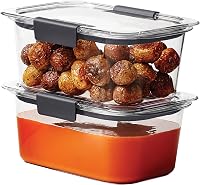
Rubbermaid Brilliance includes two 4.7-cup rectangular containers with lids. The BPA-free plastic containers have airtight seals, secure latches, built-in vents for splatter-resistant microwaving with the lid on, and are marked microwave safe, dishwasher safe, and freezer safe.
These containers suit people who want a smaller set for larger portions rather than a 50-pack. Their clear construction makes the food easy to identify, while the rectangular form helps with stacking.
The 2-pack gives you fewer containers for batch cooking. It can work well for a small household or for keeping a few larger meals ready without filling a whole cabinet with containers.
How do you prevent freezer burn?
Reduce air around the food, seal the lid fully, and avoid leaving meals uncovered in the freezer. Freezer burn is more likely when food is exposed to dry freezer air for a long time.
It can leave pale patches on the surface and make food taste flat or stale.
Use a container that fits the portion without leaving a large empty area. Extra air inside gives dry air more room to reach the food.
A snug fit also makes stacking easier.
Do not force the lid down onto the food, since that can weaken the seal or cause spills during freezing. Leave headspace for expansion, wipe the rim clean, and close every corner before the container goes in.
If food touches the lid, it can freeze to it and make the seal harder to keep clean.
Press air out where you can, but do not overfill the container in the name of saving space. For soups and sauces, a little extra room near the top protects the seal as the food expands.
Label every container with the meal name and freezing date. A label helps you use older meals first and avoid opening several containers to identify dinner.
It also reminds you to check for pale, dry patches before you plan a meal around that container.
Place containers on a level shelf to freeze at first. This lowers the risk of leaks while the food is still liquid.
Once meals are solid, group them by type so you can find soups, sauces, and main dishes without long searches.
For more container comparisons, see best meal prep containers for the freezer and best freezer safe containers.
Are round containers good for freezing meals?
Round containers work well for soups, broths, sauces, yogurt, and other foods that are easy to scoop or pour. They can be less space-efficient than rectangular containers, so check the freezer layout before buying many.
DuraHome provides 24 clear, round, 32 oz containers with lids. The BPA-free polypropylene containers are marked freezer safe, microwave safe, dishwasher safe, reusable, and stackable.
Choose DuraHome when you need many larger containers for liquid meals or family-size portions. The 32 oz capacity gives you more room than a smaller lunch portion, but you still need headspace for expansion.
The round shape can leave unused space beside rectangular freezer boxes. Compare the dimensions of your shelves and drawers first, or see these best large freezer safe containers.
How do you freeze containers so they stack well?
Freeze containers on a flat shelf until the food is firm, then stack them if the shape and lids allow it. A level surface helps prevent leaks while the food is still liquid.
Leave space between containers during the first part of freezing if your freezer needs better airflow. Once meals are solid, group matching containers together and keep labels facing outward.
Rectangular containers usually make neat rows. Round containers can be easier to remove one at a time when stored in a drawer or bin, but they may leave gaps around the sides.
Meal planning can make the system easier to maintain. These guides cover Better Meal Planning on a Budget with a Smart Fridge and 5 Tips for Easier Meal Prepping with Smart Fridges.
How should you thaw and reheat frozen meals?
Thaw meals in the refrigerator when you have time, or reheat them according to the container's instructions if the container is microwave safe. Use short heating intervals and stir when possible.
Move a frozen meal to the refrigerator before you need it, especially when it contains a large portion. For microwave reheating, vent or loosen the lid as directed so steam can escape.
For a material-specific answer, see microwave-safe stainless steel containers.
Never assume every freezer container can go straight into a microwave. For plastic-specific guidance, see whether plastic containers are microwave safe.
Freezer safe and microwave safe are separate features, so check both before heating.
Cooked rice needs extra care during cooling and storage. For portioning ideas, see how to freeze rice in Souper Cubes.
Which meal prep container should you choose?
Choose PROMOZE when you need 50 matching 28 oz containers for single-compartment portions. Choose Rubbermaid Brilliance when you want two larger 4.7-cup containers with airtight latches and built-in microwave vents.
Choose DuraHome when larger 32 oz round containers suit soups, sauces, and bulk portions. Whichever style you choose, confirm freezer safety, leave expansion space, cool food promptly, and label every meal before freezing.
Frequently asked questions
Can you freeze meals in meal prep containers?
Yes, you can freeze meals in containers marked freezer safe, but leave space at the top for food to expand. Let hot food cool before sealing, close the lid securely, label the contents and date, and follow the container and food manufacturer's care instructions.
How much space should you leave in a meal prep container before freezing?
Leave extra space near the top because water-rich foods expand as they freeze. The exact amount depends on the food and container shape, so avoid filling to the rim, especially with soups, sauces, and stews.
A secure lid should close without pressing against the food.
Should you cool meals before freezing them?
Yes, divide hot food into shallow portions and cool it promptly before freezing. Avoid placing a very hot, tightly closed container into the freezer.
Smaller portions cool and freeze more evenly, while labels make it easier to use older meals first.
Can you microwave frozen meals in meal prep containers?
Only microwave a container when its instructions say it is microwave safe. Loosen or vent the lid as directed, heat in short intervals, and stir when possible.
Never assume freezer-safe means microwave-safe, and avoid heating containers that are damaged or warped.